Neopress growth journal
Why AI-driven websites are the future of online business

The way businesses build and manage their websites is changing. Not long ago, creating a professional website meant hiring developers, working with designers, and spending weeks or even months getting everything ready. Today, artificial intelligence is making that process much faster and more accessible.
This shift is part of a much bigger trend. According to McKinsey's 2025 State of AI report, 88% of respondents said their organizations regularly used AI in at least one business function in 2025, compared with 78% in 2024. Although this figure does not specifically measure AI-powered websites, it demonstrates how quickly artificial intelligence is becoming part of everyday business operations.
With the rise of the AI website builder, businesses can create websites, generate content, and make changes simply by describing what they need. But AI is doing more than making website creation easier. It is also changing how businesses interact with visitors, improve their online visibility, and understand customer behavior.
In 2026, having a website is no longer enough. Businesses need websites that are easy to manage, adapt to customer needs, and support their growth. This is why AI-driven websites are becoming an important part of the future of online business.
So, what exactly makes these websites different, and why should businesses start paying attention?
What is an AI-driven website?
An AI-driven website is a website that uses artificial intelligence to help create, manage, personalize, or improve the online experience. Depending on the tools and features available, AI can assist with everything from designing pages and writing content to answering customer questions and analyzing website performance.
If you're new to the subject, you can first explore what AI stands for and how artificial intelligence works.
However, there is an important distinction: a website built with AI is not necessarily the same as a website that uses AI to interact with its visitors.
For example, an AI website builder can help a business create a complete website by generating layouts, writing text, and organizing pages based on a simple description. On the other hand, an existing website can use AI-powered chatbots, product recommendations, or personalization features without having been built with AI.
Some of the most common ways businesses use AI on their websites include:
AI-assisted website creation: Generate website layouts, pages, and content from written instructions.
Content generation: Create or improve product descriptions, blog posts, landing pages, and other website content.
Customer support: Use AI chatbots to answer frequently asked questions and guide visitors.
Personalization: Adapt recommendations or website content based on visitor interests and behavior.
SEO optimization: Get help with keyword research, metadata, content structure, and other search optimization tasks.
Website analytics: Analyze traffic and visitor behavior to identify areas that could be improved.
Not every AI-powered website includes all these features. The capabilities depend on the platform, integrations, and tools a business chooses.
Why AI-driven websites are the future of online business
AI is changing website development because it helps businesses save time, reduce repetitive work, and make better use of their online presence. Here are some of the main reasons why this technology is becoming increasingly important.
1. Faster and easier website creation
One of the biggest advantages of AI is how much easier it makes building a website.
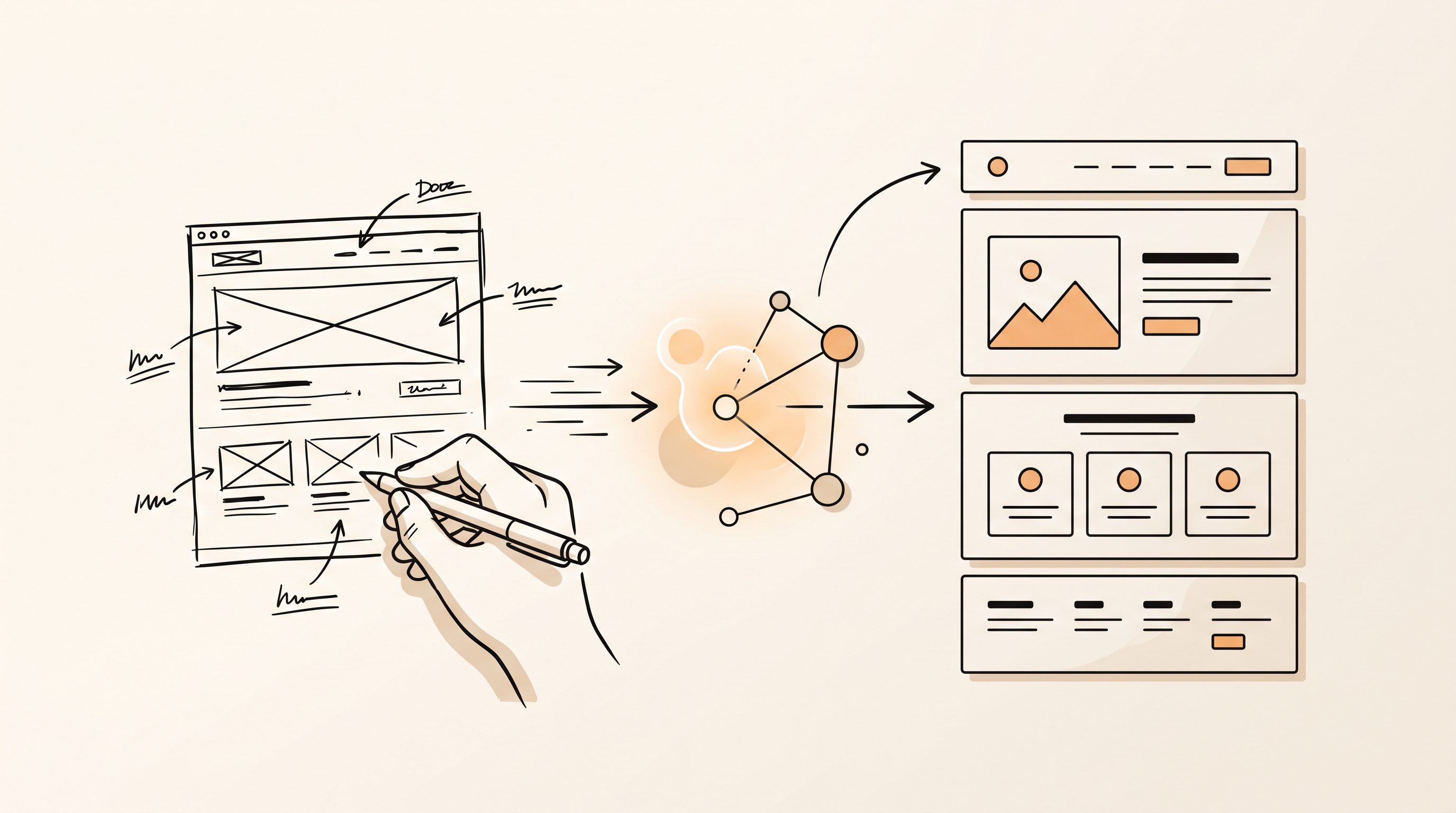
Traditionally, businesses needed to handle several steps before launching a website: planning the structure, designing pages, writing content, and sometimes hiring developers to handle the technical side. Even with traditional website builders, users still had to make many decisions manually.
An AI website builder simplifies this process. Instead of starting with a blank page, users can describe their business, explain what kind of website they want, and let the AI generate an initial version.
This doesn't mean every website will be ready to publish without any adjustments. Businesses still need to check the content, verify information, and make sure the design reflects their brand. However, AI can significantly reduce the amount of manual work involved.
For startups, freelancers, and small businesses, this makes launching an online presence much more accessible.
If you want to understand how website creation without coding works, take a look at our guide to what a no-code website builder is and how it works.
2. More personalized user experiences
Visitors don't all come to a website looking for the same thing. Some want to compare products, others need support, and some are simply researching their options.
Traditional websites often show the same content to everyone. AI makes it possible to create more personalized experiences by analyzing information such as browsing behavior, previous interactions, and customer preferences.
There is evidence that personalization matters to customers. According to Salesforce's State of the Connected Customer research, 73% of customers said companies treated them as individuals rather than numbers, compared with 39% in the previous survey. The research also highlights growing concerns about personal data, with 71% of customers saying they were becoming more protective of their information.
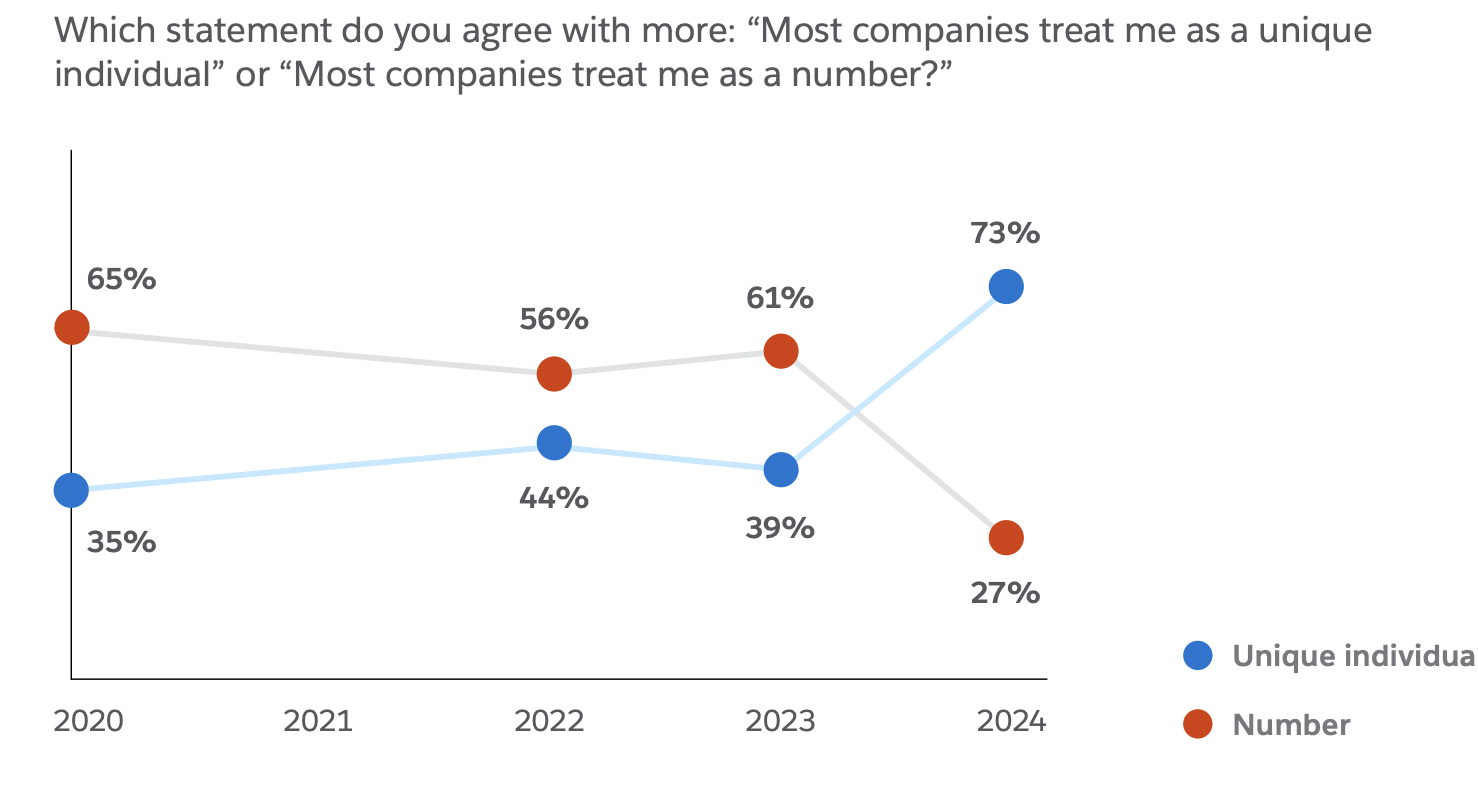
For businesses, this highlights an important balance: customers appreciate relevant experiences, but they also expect companies to handle their data responsibly.
For example, an online store could use AI-powered recommendation tools to suggest products based on what a visitor has viewed or purchased before. A service business could use a chatbot to guide visitors toward the most relevant service based on their questions.
This can make websites easier to navigate and help visitors find what they need more quickly.
3. 24/7 Customer support with AI chatbots
Customer support is another area where AI can make a real difference.
A business cannot always have someone available to answer questions, especially outside normal working hours. When visitors cannot find the information they need, they may leave the website and look elsewhere.
AI chatbots can help solve this problem by answering common questions at any time of day. Depending on how they are configured, they can explain services, provide product information, guide visitors through a booking process, or direct more complicated requests to a human team member.
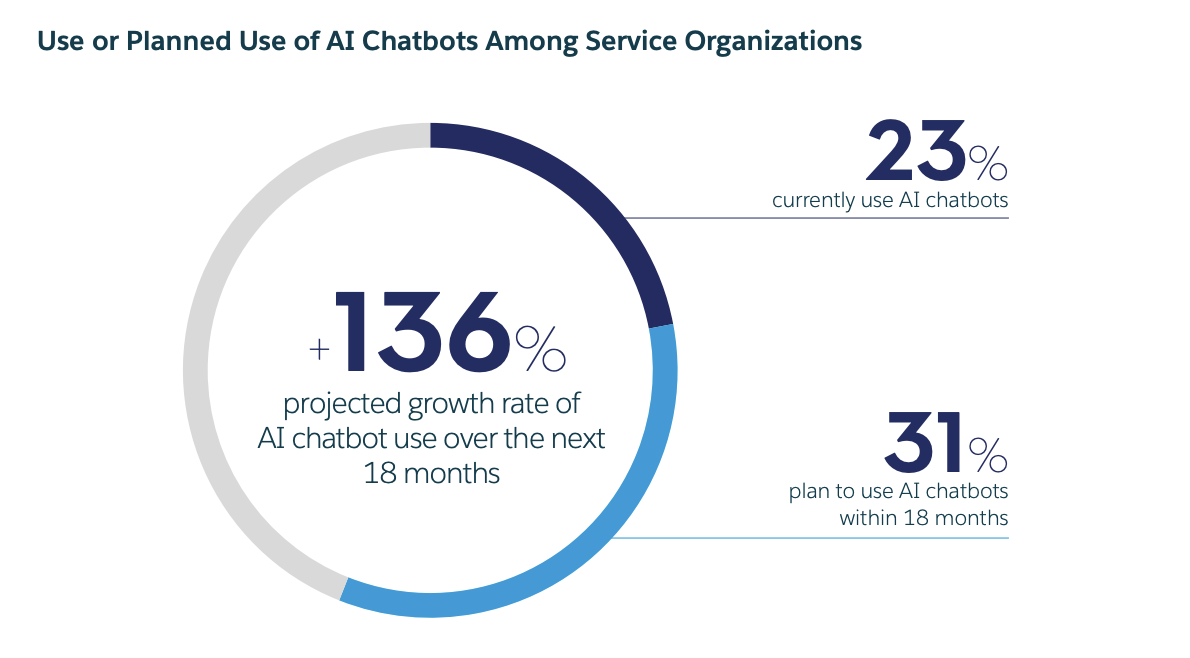
This technology is already being adopted by customer service teams. According to Salesforce's State of Service research, 23% of surveyed service organizations were already using AI chatbots, while another 31% planned to adopt them within the following 18 months. The report also found that 68% of service professionals at organizations using AI chatbots said their teams had experienced a reduction in call and email volume.
Imagine someone visiting a website late at night to ask about a company's pricing or delivery options. Instead of waiting until the next business day, they could receive an immediate answer from an AI assistant.
For small businesses with limited support resources, this can make customer communication more convenient without requiring a full-time support team.
However, AI chatbots are not always able to handle every situation correctly. Businesses should provide a clear way for customers to contact a real person, especially when dealing with complex or sensitive requests.
4. Smarter SEO and content creation
Having a website is one thing. Making sure people can find it through search engines is another.
SEO requires ongoing work, including keyword research, content creation, internal linking, and technical optimization. AI tools can help businesses manage some of these tasks more efficiently.
For example, AI can help identify relevant topics, suggest keywords, generate article outlines, improve existing content, and create draft titles or meta descriptions. Some website platforms also provide tools for managing metadata, structured data, redirects, and other technical SEO elements.
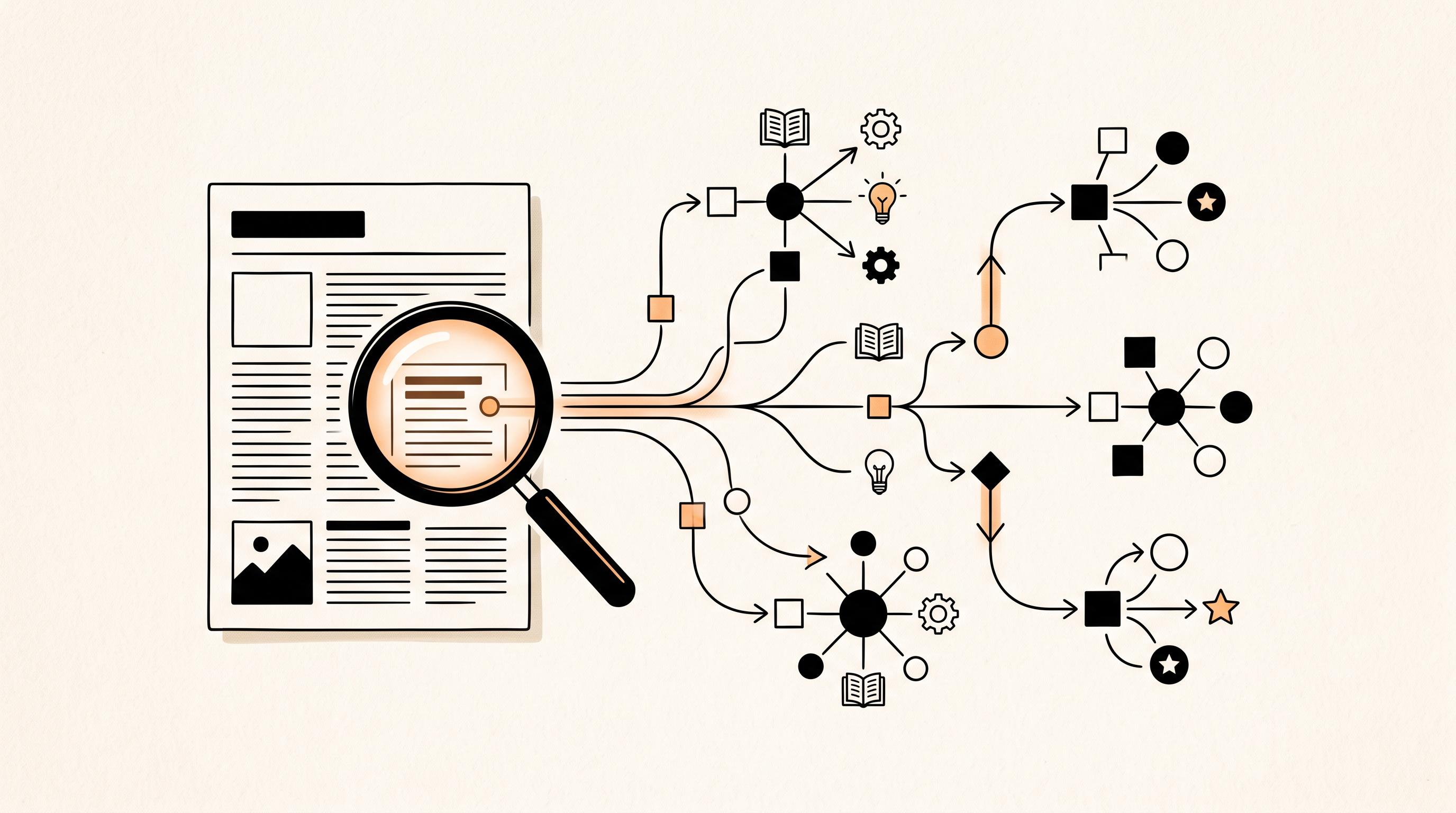
An AI website builder can make this process easier by combining website creation and content management in one place. Instead of switching between several tools, businesses may be able to create pages, publish articles, and manage parts of their website from a single platform.
Neopress is one example of this approach. It allows users to build and develop a website through conversations with AI, create pages, publish content, and understand website traffic.
Google's official documentation on AI features in Search explains that existing SEO best practices remain relevant for websites appearing in AI-powered Search features, including AI Overviews and AI Mode. Google emphasizes useful, original content and a technically accessible website rather than special optimization tricks.
Of course, using AI does not automatically make a website rank higher on Google. Content still needs to be accurate, original, useful, and relevant to what people are searching for. AI is best used as a tool to support a solid SEO strategy, not replace it.
If you're interested in using AI beyond website creation, our beginner's guide to using AI in marketing explores practical ways businesses can apply it to their marketing activities.
5. Better decisions through website analytics
A website generates useful information about how visitors interact with a business. The challenge is understanding what that information means and what to do with it.
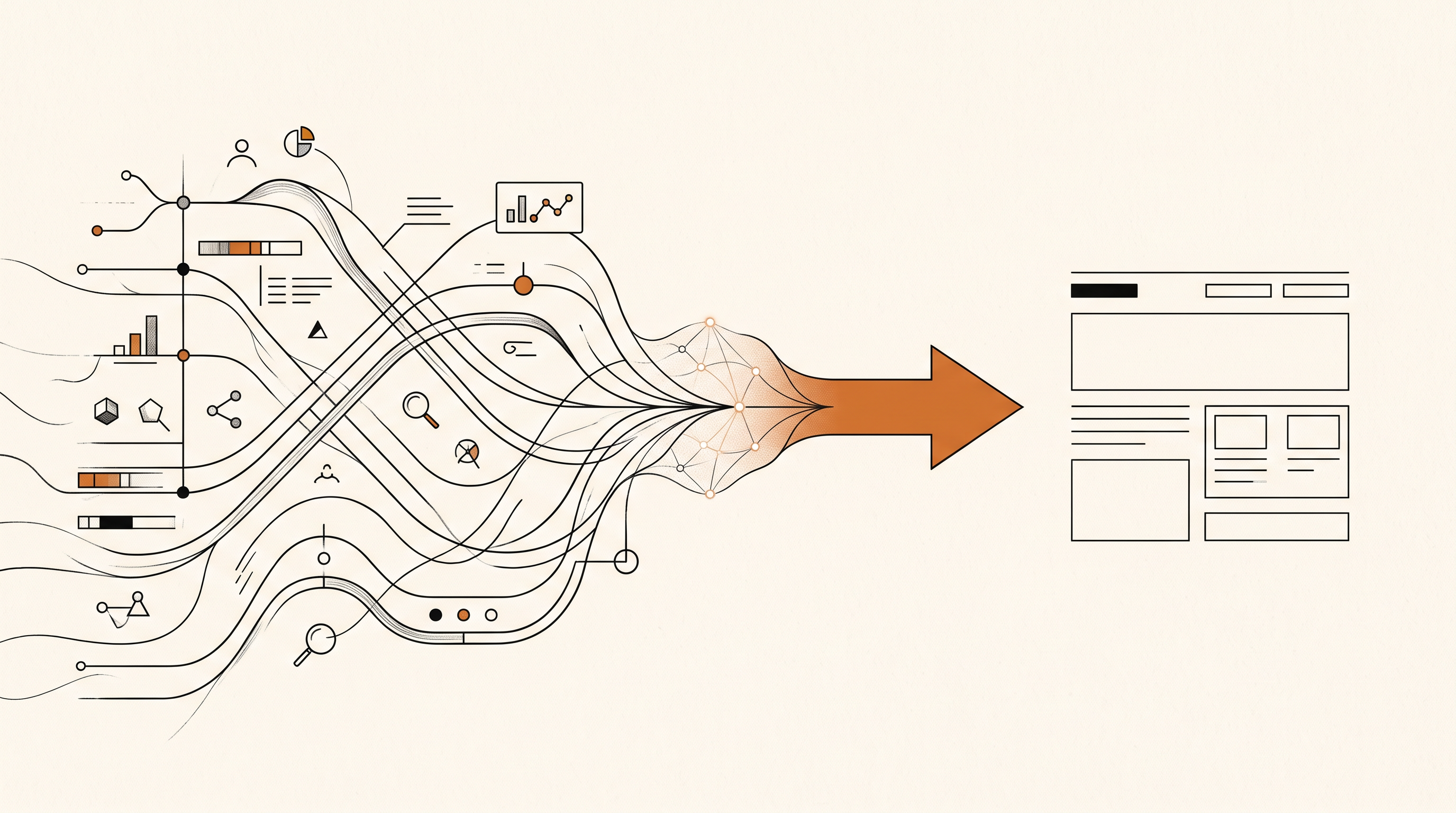
AI-powered analytics tools can help businesses identify patterns in website traffic, visitor behavior, and engagement. Depending on the platform, they may highlight which pages receive the most attention, where visitors leave, or which content performs better.
For example, an online store might notice that many visitors view a particular product but leave before completing a purchase. By analyzing this behavior, the business can investigate possible issues with the product page, pricing information, or checkout process.
AI can also help summarize large amounts of data and turn them into insights that are easier to understand.
This is especially useful for small businesses that don't have dedicated data analysts. Instead of manually reviewing every report, business owners can use AI-assisted tools to identify areas that deserve attention.
The important point is that AI recommendations should still be checked against real business data. They can help identify opportunities, but they do not guarantee better results.
6. Lower development costs and more accessible technology
Building and maintaining a website can be expensive, particularly for businesses that need custom design or development work.
AI tools can reduce some of these costs by automating repetitive tasks and allowing non-technical users to handle more of the process themselves.
For example, a freelancer may be able to create a portfolio website using an AI website builder instead of paying someone to build every page from scratch. A small company could also use AI to draft website content or make simple updates without needing to contact a developer each time.
This doesn't mean professional developers and designers are no longer necessary. Complex websites, advanced integrations, security requirements, and custom functionality may still require technical expertise.
However, AI gives businesses more options. They can start with a simpler solution, manage routine tasks themselves, and invest in professional development when their needs become more advanced.
How AI website builders help businesses grow
AI-driven websites are not only useful for large companies with dedicated technology teams. They can also help small businesses, independent professionals, and startups build a stronger online presence.
Here are a few practical examples:
For small businesses: An AI website builder can help create a professional website without requiring advanced coding or design skills. Owners can build service pages, add contact information, and update their content more easily.
For e-commerce businesses: AI tools can help generate product descriptions, organize content, and support personalized product recommendations. This can make managing a large product catalog more efficient.
For freelancers and consultants: AI can help create portfolio pages, service descriptions, and landing pages that explain what they offer and make it easier for potential clients to get in touch.
For marketing agencies: AI can speed up the creation of website drafts and content, giving teams more time to focus on strategy, branding, and client needs.
For startups: AI website builders make it easier to launch an initial website, test a business idea, and update pages as the company develops.
The main advantage is flexibility. Businesses can use AI to simplify everyday website tasks while keeping control over their branding, content, and business decisions.
AI website builders vs traditional website development
Does the rise of AI mean traditional website development is becoming obsolete? Not exactly.
Both approaches have advantages, and the right choice depends on the type of website a business needs.
Feature | AI website builder | Traditional website development |
Website creation | AI helps generate pages and layouts | Pages are designed and developed manually |
Technical skills | Often requires fewer technical skills | May require coding and development knowledge |
Speed | Can produce an initial website quickly | Usually takes longer, depending on complexity |
Customization | Depends on the platform's available features | Can offer extensive customization |
Content creation | AI can help generate and edit content | Content is generally created manually or with separate tools |
Maintenance | Some platforms simplify updates and management | Maintenance may require developers |
Best for | Small businesses, freelancers, startups, and simple websites | Complex projects and highly customized websites |
An AI website builder is a good option when a business wants to launch quickly, reduce manual work, or manage its website without relying heavily on developers.
Traditional development may be a better choice when a project requires complex functionality, specialized integrations, or complete control over the code and infrastructure.
There is also a third option: combining both approaches. A business can use AI to generate the initial website and then work with a developer to customize specific features.
How to choose the right AI website builder
Not all AI website builders offer the same features. Some focus mainly on generating website designs, while others provide tools for content creation, publishing, SEO, and website management.
Before choosing a platform, consider the following factors.
Ease of use
The platform should make website creation easier, not more complicated. Look for an interface that allows you to describe what you need, generate pages, and make changes without requiring extensive technical knowledge.
Customization options
AI-generated designs are a starting point. You should be able to adjust layouts, text, images, colors, and other elements to match your brand.
SEO features
Check whether the platform supports essential SEO features such as editable page titles, meta descriptions, clean URLs, sitemaps, and structured data. These features can help you manage your website's search visibility.
Content management
If you plan to publish blog posts, news, or regular updates, look for a platform that makes it easy to create, edit, and publish content. For more guidance, read how to humanize AI-generated text for your blog.
Integrations and analytics
Your website may need to connect with tools such as Google Analytics, Google Search Console, email marketing platforms, or customer management software. Check which integrations are available and whether they require additional subscriptions.
Pricing and scalability
Finally, consider the total cost. Some platforms offer free plans or trials, while others charge monthly subscriptions. Make sure the features included in the plan match your needs and that the platform can support your business as it grows.
The challenges of AI-driven websites
Although AI offers many advantages, businesses should also understand its limitations before relying on it.
Accuracy and content quality: AI-generated content can contain incorrect information, outdated details, or generic explanations. All important website content should be reviewed before publication. This is also why businesses should avoid publishing generic AI-generated pages without adding their own expertise and perspective.
Learn more in our article about AI slop design and why generic AI-generated websites can hurt your brand.
Data privacy: Personalization and AI chatbots may rely on customer information. Businesses need to handle that information responsibly and comply with applicable privacy regulations.
Limited customization: Some AI website builders offer less flexibility than custom development. Businesses with complex requirements should check the platform's capabilities before committing.
Human oversight: AI can automate tasks, but it cannot fully replace human judgment, brand strategy, or customer understanding.
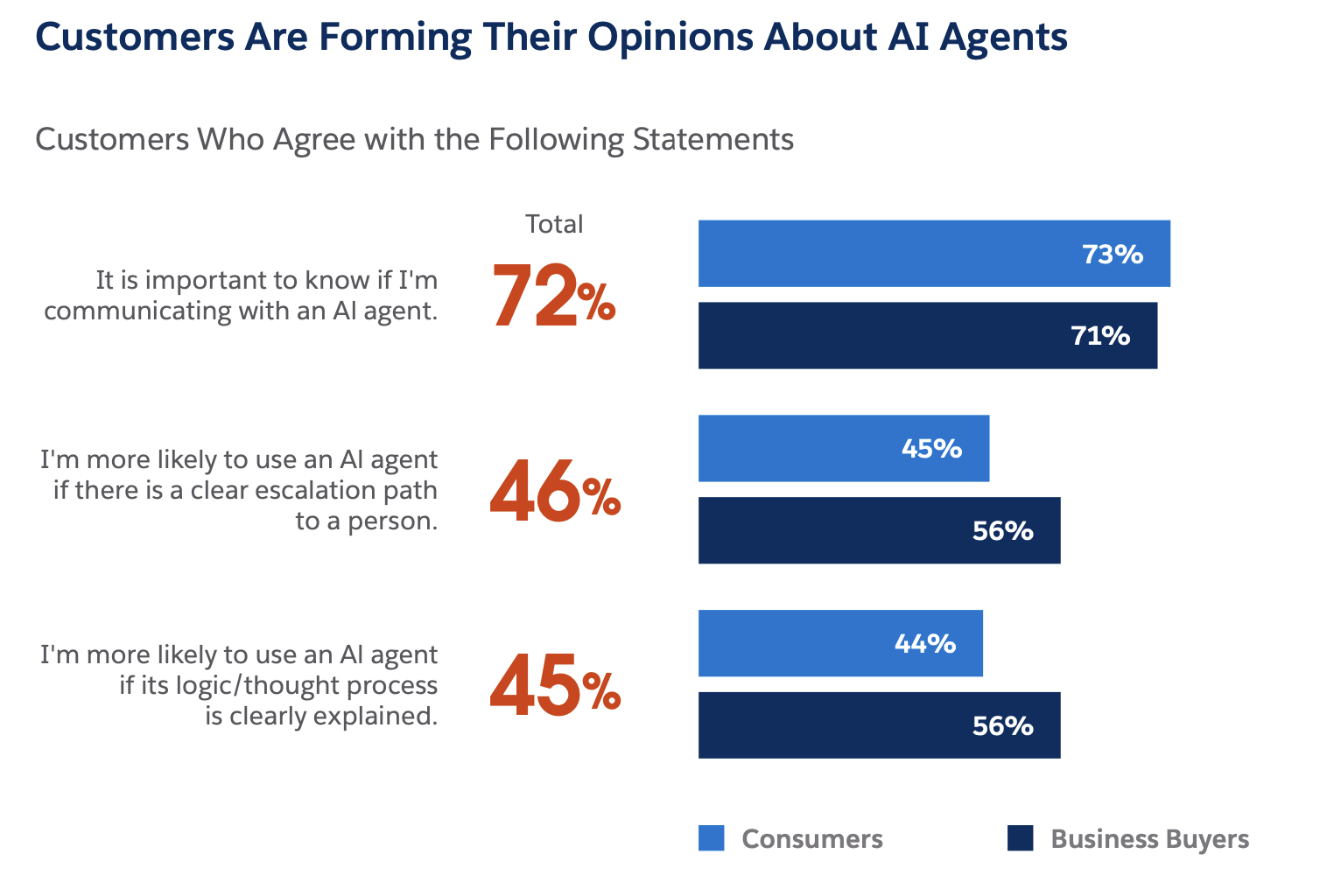
Customer trust is another important consideration. According to Salesforce's State of the Connected Customer research, 72% of customers considered it important to know whether they were communicating with an AI agent. This highlights why businesses should be transparent when using AI-powered customer support.
Google also explains in its official guidance on using generative AI content that automatically generated content should be evaluated for accuracy, quality, and relevance. Content created with AI is not automatically rewarded in Google Search simply because AI was used.
The goal should not be to automate everything. It should be to use AI where it genuinely improves the website and the experience it provides.
The future of AI in website development
AI website technology is still evolving, and its role in online business is likely to become even more significant.
One important development is the move toward conversational website creation. Instead of manually navigating multiple settings and editing every element individually, users can increasingly describe what they want in natural language and let AI help make those changes.
We can also expect further developments in personalization, automated content management, AI-assisted analytics, and integrations with other business tools.
Another important trend is the combination of website creation and ongoing management. Rather than simply generating a website once, AI platforms are increasingly helping users update pages, publish content, and understand how their websites perform over time.
However, the future of website development will not be entirely automated. Businesses will still need human creativity, strategic thinking, and quality control. AI can handle many repetitive tasks, but people remain responsible for deciding what a website should communicate and how it should serve its audience.
The businesses that benefit most will likely be those that use AI thoughtfully: automating what can be automated while maintaining the quality and personality that make their brand recognizable.
Final thoughts
AI-driven websites are changing the way businesses build, manage, and improve their online presence. From faster website creation to smarter content management and more personalized customer experiences, artificial intelligence is making website technology more accessible.
For small businesses and startups in particular, an AI website builder can reduce the time and effort required to launch a professional website. Larger companies can also use AI to improve existing workflows, analyze customer behavior, and support their digital strategies.
But adopting AI does not mean handing over every decision to technology. The best results come from combining AI's speed and automation with human creativity, judgment, and a clear understanding of customer needs.
As AI tools continue to develop, businesses that learn how to use them effectively will be better prepared to adapt to the changing online landscape.
Frequently asked questions
What is an AI website builder?
An AI website builder is a platform that uses artificial intelligence to help users create and manage websites. Depending on the tool, users can generate layouts, write content, create pages, and make website changes by providing instructions instead of doing everything manually.
Can AI build a complete website?
Yes. Many AI website builders can generate a website structure, design, and initial content from a written description. However, the result usually needs to be reviewed and customized before publishing. Businesses should check that the information is accurate, the design reflects their brand, and all important features work correctly.
Are AI-built websites good for SEO?
They can be. An AI-built website can perform well in search engines if it has useful content, a clear structure, good performance, and properly implemented SEO elements. However, using AI to create a website does not guarantee higher rankings. Search visibility still depends on the quality and relevance of the website.
Can small businesses benefit from AI website builders?
Absolutely. AI website builders can help small businesses create professional websites with less manual work and fewer technical requirements. They can also make it easier to update pages, publish content, and manage an online presence without a large development budget.
Will AI replace web developers?
AI is changing the work developers do, but it is unlikely to eliminate the need for them. AI can help generate code, layouts, and website content, but complex projects still require technical knowledge, problem-solving, security expertise, and human oversight. Developers may increasingly use AI as a tool to work more efficiently.
What is the difference between an AI website builder and a traditional website builder?
A traditional website builder usually relies on templates, visual editors, and manual configuration. An AI website builder adds artificial intelligence to the process, allowing users to generate pages, layouts, or content from written instructions. Some platforms combine both approaches.
Newsletter
A sharper growth note, once in a while.
Get practical SEO strategies, SSR guides, and AI search insights delivered directly to your inbox.
We respect your privacy. Unsubscribe at any time.