Neopress growth journal
Best ways to increase website traffic by AI: 7 strategies to grow your online visibility

Getting more visitors to your website sounds simple: publish more content, improve your SEO and promote your pages. But if you've already tried these things without seeing much progress, you probably know that website traffic doesn't grow just because you put more effort into it.
Sometimes, your website isn't targeting the right searches. Sometimes, people see your pages in Google but don't click. And sometimes, your content attracts visitors who aren't really interested in what you offer.
This is where AI can help you approach website growth differently.
Instead of using artificial intelligence just to write blog posts, you can use it to understand why your website isn't attracting enough visitors, discover opportunities your competitors are missing, and decide which improvements are most likely to make a difference.
The opportunity is also expanding beyond traditional search engines. A Semrush study published in April 2026 analyzed billions of visits across more than 50,000 websites and 17 industries. It found that traffic from AI platforms grew by 66% in 2025. However, it still represented less than 0.15% of total website visits in the study.
This shows why you shouldn't focus on just one source of traffic. Google Search remains important, but AI-powered discovery, social platforms, referrals and other channels can also help people find your website.
So, what are the best ways to increase website traffic by AI?
Let's look at seven practical strategies you can use to identify opportunities, attract more relevant visitors, and build a website that is easier to discover.
1. Find out why your website isn't getting enough traffic
Before trying to attract more visitors, you need to understand what's preventing your website from growing.
For example, imagine you run an online store. Your homepage receives some visits, but your product pages barely get any organic traffic. Or perhaps your blog attracts visitors, but most of them leave without exploring anything else.
These situations require different solutions.
Creating more articles won't necessarily fix a problem with product-page visibility. And increasing your social media activity won't solve an issue with pages that are not being indexed by Google.
AI can help you investigate these problems by analyzing your existing website data.
Start with Google Search Console and Google Analytics
Two useful tools are:
Google Search Console: Shows how your website appears in Google Search, including clicks, impressions, search queries, and average position.
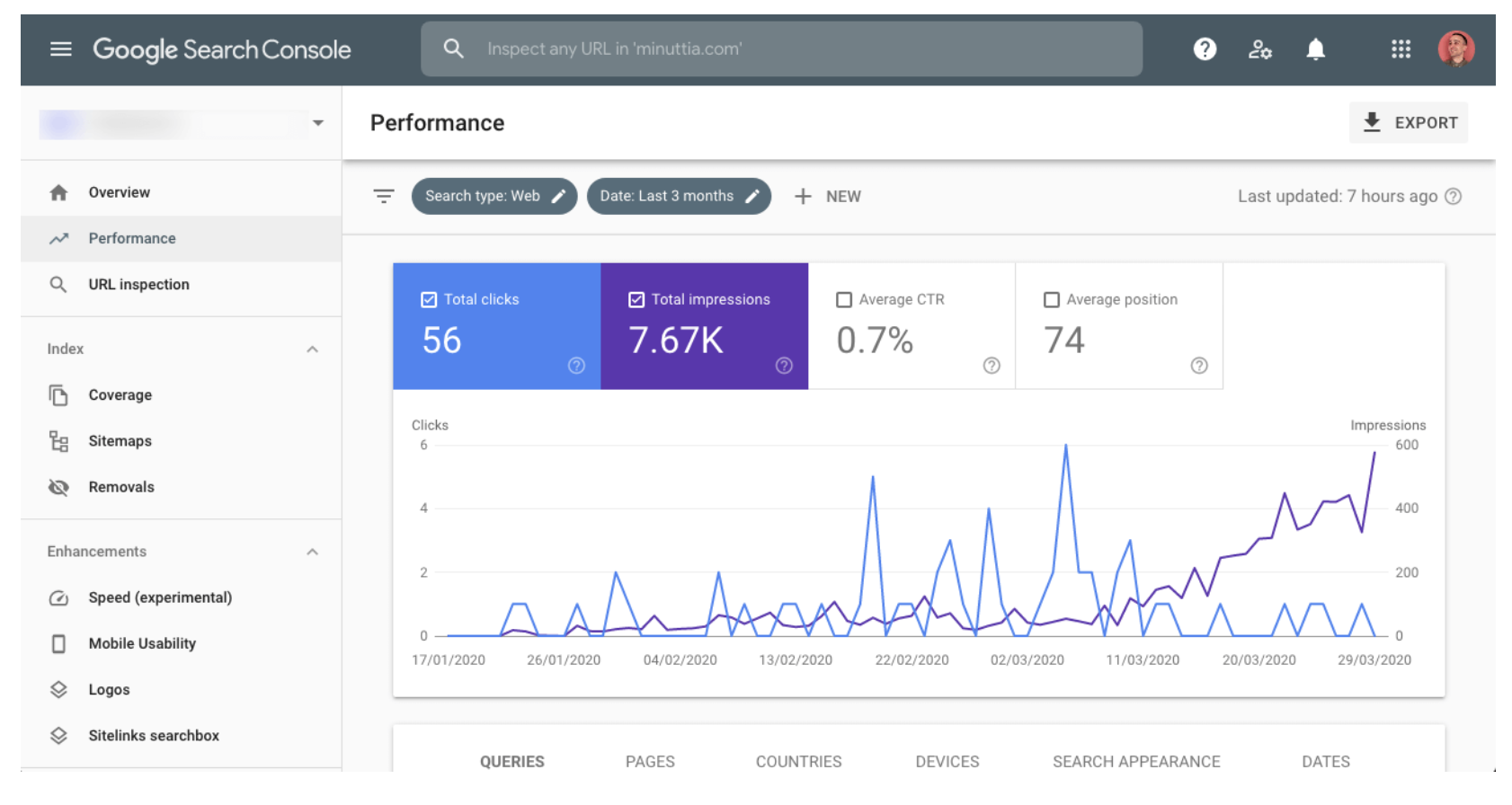
Google Analytics 4 (GA4): Helps you understand where visitors come from and what they do after arriving on your website.
You can find the Search Console Performance report to examine which searches bring impressions and clicks.
In GA4, the Traffic Acquisition report helps you compare traffic sources such as organic search, paid search, social media, and referrals.
Let AI help you identify the problem
Export your reports from Google Search Console or Google Analytics 4 and share them with an AI assistant such as ChatGPT, Claude, Gemini, or Microsoft Copilot. Rather than asking it to simply summarize the numbers, ask it to look for patterns and identify areas that need attention.
Beyond individual AI assistants, businesses can also use AI agents to automate more complex tasks and workflows. Learn more in our guide on what AI agents are and why they matter for your business.
For example, these AI assistants can help you investigate:
Pages receiving impressions but very few clicks.
Pages that have lost traffic compared with previous months.
Search queries that are relevant to your business but not properly covered.
Landing pages attracting visitors from unexpected sources.
Pages receiving traffic but generating few enquiries or purchases.
You can then use their analysis to decide which pages deserve further investigation and what improvements to prioritize.
A practical example
Imagine your website has three important pages:
Page | Monthly visits | What you notice |
Homepage | 2,000 | Most visitors arrive here |
Blog article | 1,200 | Good traffic from Google |
Product page | 150 | Very little organic visibility |
An AI assistant might help you investigate whether the product page lacks useful descriptions, relevant search terms, internal links, or information that customers need before making a purchase.
The numbers alone don't prove what's wrong, but they give you a starting point for further investigation.
Try this prompt:
"Analyse the website performance data below. Identify the pages with the strongest and weakest traffic trends. Look for possible reasons why certain pages receive impressions but few clicks, or attract visitors without generating conversions. Separate observations supported by the data from possible explanations. Recommend the three most important issues I should investigate first."
Why start here? Because you don't want to spend weeks creating new content when a few improvements to your existing website could address a more important problem.
2. Discover keyword opportunities your competitors are missing
One of the most effective ways to attract organic traffic is to appear when people search for information related to your business.
But targeting the most popular keywords isn't always the best approach.
Broad keywords can be extremely competitive, especially if you're running a relatively new website. You may have a better opportunity by targeting more specific searches that reveal exactly what someone wants to know.
AI can help you discover these opportunities by analyzing your niche, your competitors, and the questions your audience asks.
Look beyond obvious keywords
Imagine you sell skincare products.
A broad keyword such as "skincare" covers an enormous subject. It doesn't tell you exactly what the person is looking for.
More specific searches might include:
How to build a skincare routine for sensitive skin.
Which ingredients help with dry skin?
How often should you use a vitamin C serum?
What is the difference between retinol and retinal?
These searches reveal more about the user's needs and can help you create content that answers specific questions.
Use AI for competitor keyword research
Start by identifying three to five websites competing in your niche.
You can then use SEO platforms such as:
Semrush: For keyword research, competitor analysis, and keyword gap opportunities.
Ahrefs: For analysing competitor keywords, backlinks, and organic search performance.
Google Keyword Planner: For exploring keyword ideas and estimated search demand.
AI can help organise the information from these tools and identify subjects that deserve further research.
For example, you could compare the topics covered by your competitors with the pages already published on your website.
You might discover that several competitors have detailed guides about a particular subject, while your website only mentions it briefly.
That could be an opportunity to create a more useful resource.
Build a keyword opportunity list
Instead of asking AI for hundreds of random keywords, give it a specific task.
Ask it to organise opportunities according to:
Keyword opportunity | What to look for | Possible content |
Unanswered questions | Questions your audience still has | Educational articles |
Comparison searches | People comparing products or solutions | Comparison guides |
Problem-related searches | People trying to solve a specific issue | How-to articles |
Buying-related searches | People evaluating a purchase | Product and service pages |
Long-tail keywords | More specific search phrases | Focused niche content |
Research from Ahrefs also shows why it's worth looking beyond traditional search referrals. Its analysis found that ChatGPT accounted for approximately 50% of the AI chatbot traffic recorded across its sample of 3,000 websites, followed by Perplexity and Gemini.
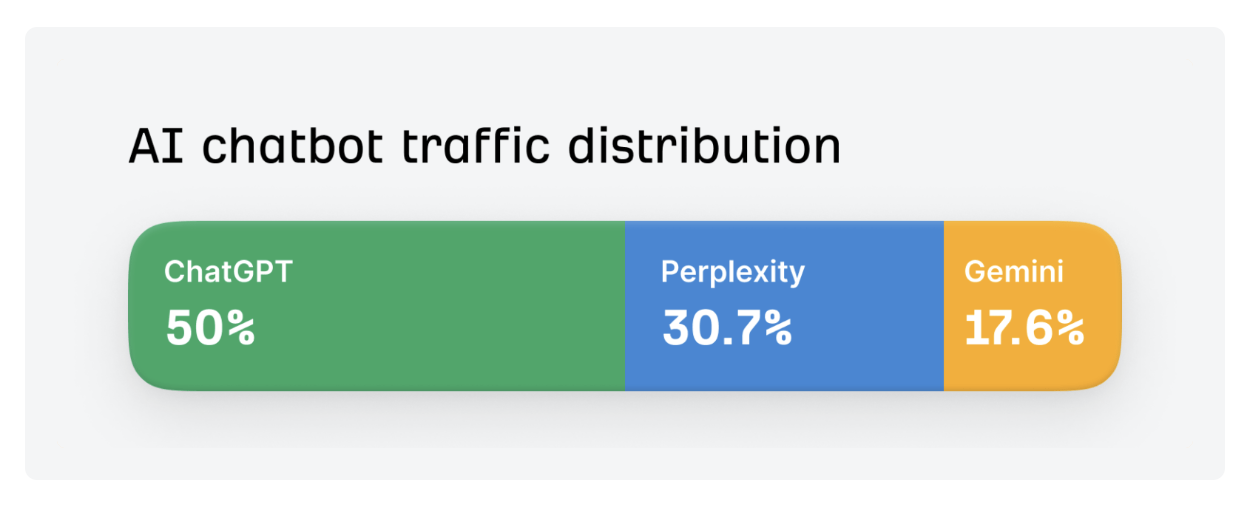
This doesn't mean you should focus your entire keyword strategy on AI platforms. It does show why understanding how people discover information across different platforms is becoming increasingly relevant.
Remember that AI-generated suggestions are not proof of search volume. Validate each opportunity using keyword research tools and by examining the actual search results.
Try this prompt:
"My website is about [industry] and my main competitors are [competitor websites]. Based on the topics and keywords I provide, identify relevant search opportunities that my website does not cover well. Group them by search intent: informational, commercial, transactional, and navigational. Prioritise topics that are relevant to my business and suggest a suitable page format for each. Do not invent search-volume or keyword-difficulty figures."
The goal isn't to target every possible keyword. It's to find searches where your website can provide a genuinely useful answer.
3. Create content around search intent, not just keywords
Finding a good keyword is only the beginning.
You also need to understand what people expect to find when they search for it.
This is called search intent.
For example, someone searching for "best website builder for small businesses" probably wants to compare different platforms. Someone searching for "how to create a website" is more likely looking for a step-by-step explanation.
If you create the wrong type of page, even a relevant keyword may not bring the results you expect.
AI can help you understand search intent and build content that matches what people are actually looking for.
Analyse the search results before writing
Take one keyword you want to target and examine the pages already appearing in Google.
Look at:
The type of content ranking for the keyword.
The questions covered by competing pages.
The formats used, such as tutorials, lists, comparisons, or product pages.
The information readers might still need.
Whether the results focus on beginners, professionals, or another audience.
You can then give this information to an AI assistant and ask it to identify what your page should cover.
Create a content brief before drafting
Rather than asking AI to write a complete article immediately, use it to prepare a detailed content brief.
For example, if your keyword is "how to improve website speed", your brief might include:
What website speed actually means.
Common reasons websites load slowly.
How to identify performance problems.
Practical ways to improve loading times.
Tools for testing website performance.
Common mistakes to avoid.
This gives your article a clear structure and prevents it from becoming a collection of loosely related paragraphs.
Add something readers won't find everywhere else
This is where your own contribution matters.
You could include:
Screenshots from a real project.
A comparison based on your own testing.
Original examples.
A practical checklist.
A short case study.
Expert explanations.
Data from your own website or business.
There is also research suggesting that human input and originality deserve particular attention.
In a 2026 Semrush study, researchers analyzed 42,000 blog pages associated with 20,000 keywords. Pages classified as human-written appeared in Google's first position more often than pages classified as purely AI-generated: approximately 80% compared with 9%.
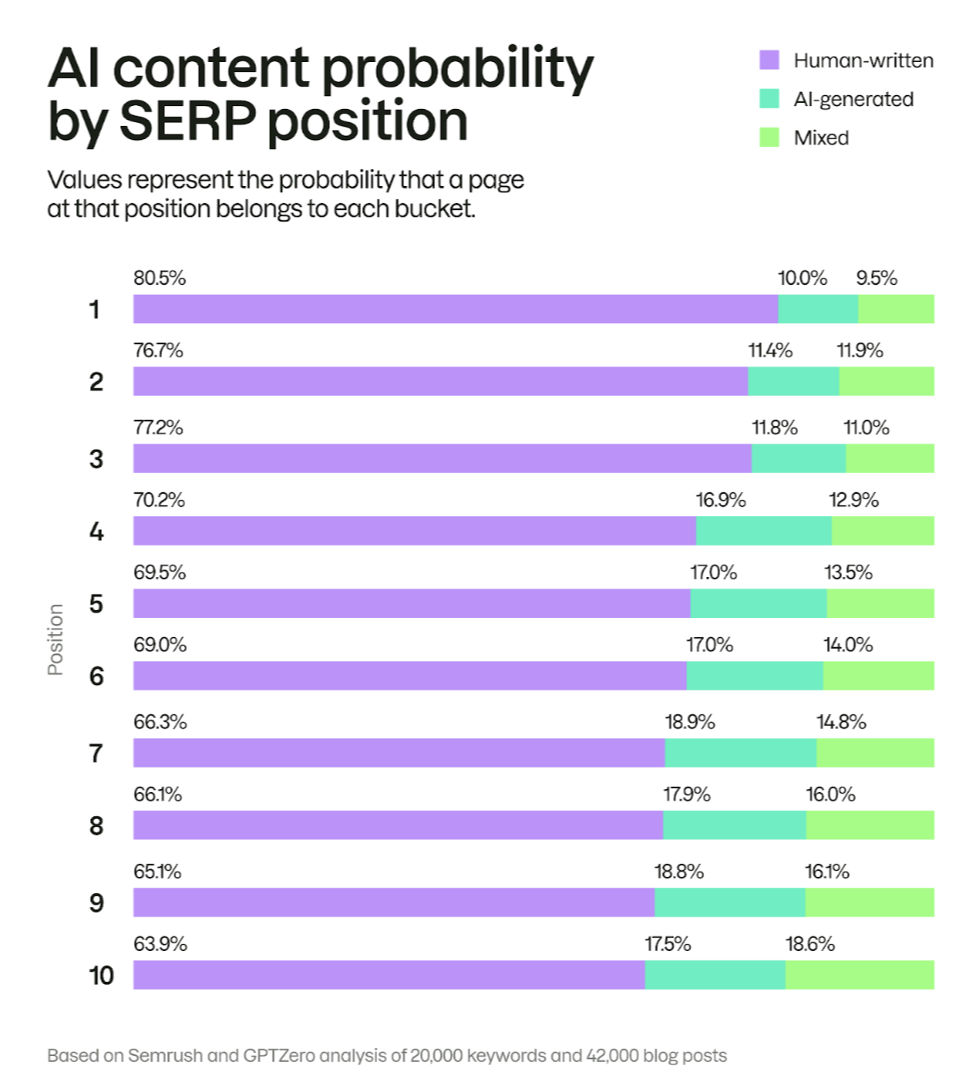
However, this result needs context. Semrush used an AI detector to classify the pages, and the analysis shows an association rather than proving that AI use causes lower rankings. It shouldn't be interpreted as a rule that AI-assisted content cannot rank.
The more useful takeaway is that AI should support research and drafting without replacing original insights, expertise, and editorial judgment.
Google makes a similar point in its guidance on helpful, reliable, people-first content. It encourages creators to provide original information, research, analysis, and value beyond what is already available elsewhere.
If you use AI to draft articles, see how to humanize AI-generated text for your blog for ways to make your content sound more natural and useful to readers.
Try this prompt:
"I'm creating a page targeting the keyword [keyword]. The intended audience is [audience]. Based on the search intent and the information below, create a detailed content brief. Identify the main question the reader wants answered, the essential sections to include, useful examples, and questions that competing pages may not answer properly. Suggest ways to make the content more original and practical. Do not invent facts or statistics."
A useful page that matches search intent has a much better reason to attract visitors than an article created simply to include a keyword.
4. Improve your existing pages so more people click on them
Getting your website to appear in search results is important, but visibility doesn't automatically translate into visitors.
People still need a reason to click.
Imagine your page appears 5,000 times in Google Search but receives only 50 clicks. Its click-through rate is 1%.
That doesn't automatically mean your page is performing badly. Its ranking position, the type of search, the competition, and the search-result layout all matter.
However, it gives you a reason to investigate whether your title and description could be more relevant.
Use AI to improve your search snippets
Your page title and meta description help communicate what someone can expect after clicking.
Compare these examples:
Generic title:
"Website Design Tips"
More specific title:
"10 Website Design Tips to Improve Your Small Business Website"
The second title gives readers a clearer idea of what they'll find.
AI can help you generate different versions of titles and descriptions based on the target keyword and search intent.
You can also ask it to check whether your titles are too vague, repetitive, or misleading.
In its 2025 research on search traffic from generative AI, Adobe found that AI-referred visitors to US retail websites viewed 12% more pages and had a 23% lower bounce rate than visitors from other sources in February 2025.
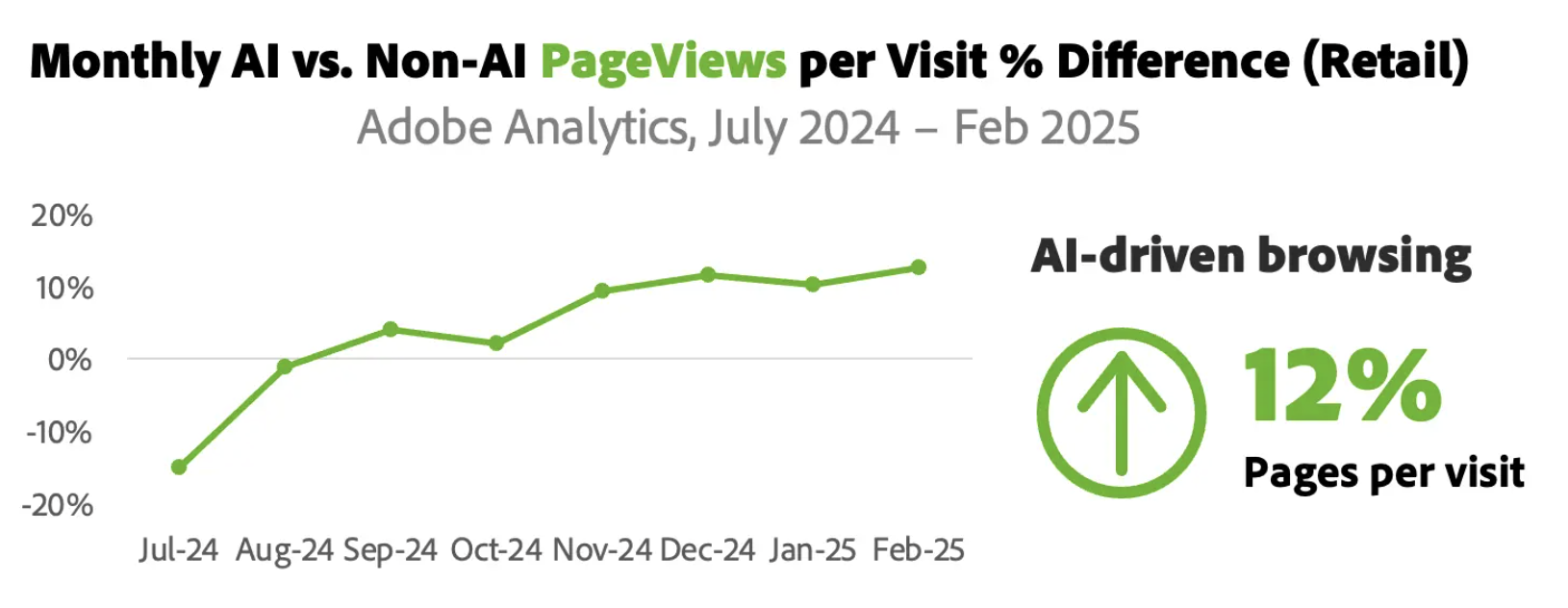
This is a useful reminder that attracting a click is only part of the job. The page also needs to deliver what the visitor expected and give them a reason to explore further.
Find pages worth updating
Use Google Search Console to identify pages with:
High impressions but relatively few clicks.
Search queries that don't match the current title.
Declining clicks over time.
Opportunities to answer additional relevant questions.
Then review the page itself.
Does the introduction answer the main question? Is the information still accurate? Are the examples useful? Does the page explain the subject clearly?
AI can help identify possible improvements, but you should check the recommendations before changing the page.
A practical example
Imagine you have an article titled "Email Marketing Guide".
Your Search Console data shows that the page receives impressions for searches related to email automation, welcome emails, and abandoned cart emails.
You could improve the article by adding clearer explanations of these topics, updating the title if necessary, and linking to more detailed guides on your website.
You might also decide that one of these subjects deserves its own article. The right decision depends on whether the new page would answer a distinct search intent rather than simply repeat existing content.
Try this prompt:
"Review this article and its Google Search Console data. Identify whether the title, introduction, headings, and content match the search queries bringing impressions. Suggest improvements that could make the page more relevant and encourage qualified clicks. Do not recommend adding keywords where they do not fit naturally, and do not promise ranking improvements."
One important point: don't change titles simply because AI suggests a more exciting version. The title should accurately describe the page and set the right expectations.
5. Make your website easier to discover through AI search
People are increasingly using AI-powered platforms to find information, compare products, and discover businesses.
Instead of typing several separate searches into Google, someone might ask ChatGPT or Perplexity a complete question and receive a summary with links to relevant websites.
This creates another potential source of visitors.
But how can you improve your chances of being discovered through these experiences?
Understand how big AI search traffic is today
BrightEdge's research, which analyzed thousands of queries and high-performing websites from January to August 2025, found that AI search platforms were growing at double-digit rates month over month. However, they still accounted for less than 1% of referral traffic in its analysis.
A more recent benchmark from The SEO Works analyzed 95 websites over 12 months, from September 2025 to August 2026. It found that organic search generated 39 times more traffic than AI assistants across the sample.
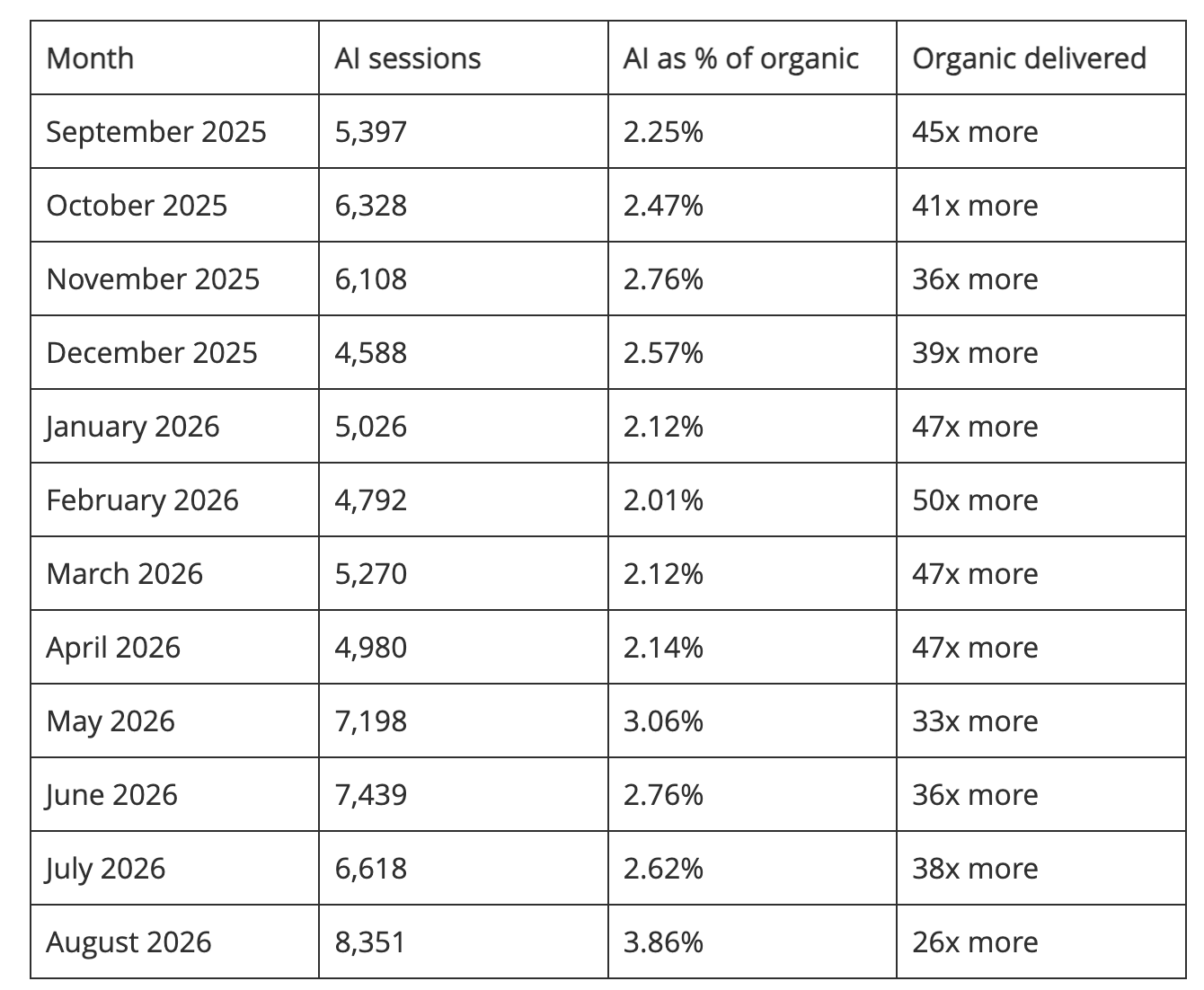
These studies make an important point: AI search is worth monitoring, but traditional organic search remains a major source of website visitors.
Start with strong SEO fundamentals
Google's own guide to generative AI features in Search explains that traditional SEO practices remain relevant for AI Overviews and AI Mode.
Google also explains that its AI search experiences use information from its Search index to generate answers and provide links to relevant websites.
This means you shouldn't assume that you need a completely different website or a secret AI optimisation technique.
Start by making your existing content useful, clear, accessible, and easy to understand.
Looking for an easier way to manage your website? Neopress lets you create pages, publish content, and understand your website traffic simply by chatting with AI !
Make important information easy to find
You can improve your content by:
Answering questions directly. Don't make readers go through several paragraphs before finding the answer to a simple question.
Using descriptive headings. Make it clear what each section explains.
Providing specific explanations. Replace vague statements with concrete examples, comparisons, and useful details.
Including reliable sources. Link to original research, official documentation, and trustworthy references when you make factual claims.
Keeping information accurate. Update outdated explanations, prices, product details, and statistics.
Showing your expertise. Include original insights, practical experience, and information that demonstrates why your website is worth visiting.
Understand what AI platforms send to your website
You can also monitor identifiable visits coming from AI platforms.
For example, some visitors arriving from ChatGPT or Perplexity may appear as referral traffic in Google Analytics, depending on how the referring information is passed to your website.
Check your GA4 Traffic Acquisition report and look for relevant referral sources.
Ahrefs' analysis of 3,000 websites found that 63% received at least one visit from an AI chatbot, but AI visitors represented only 0.17% of the average website's visitors.
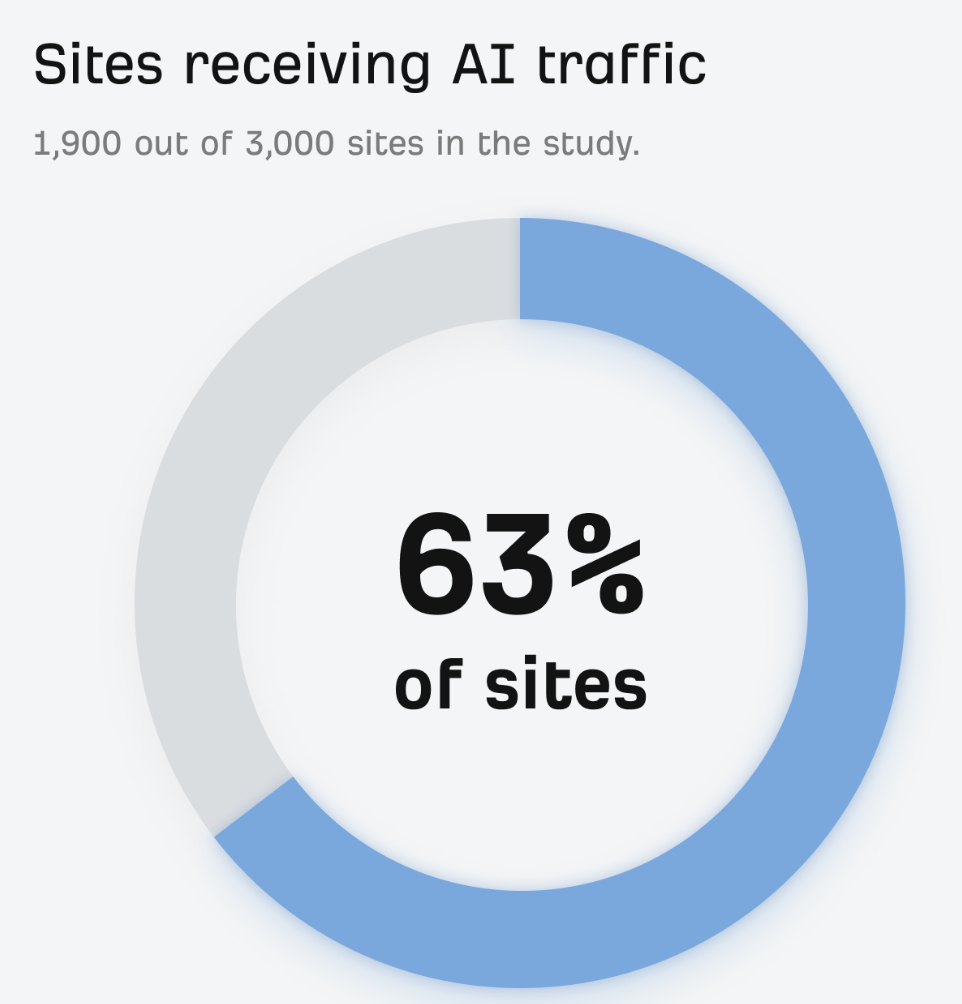
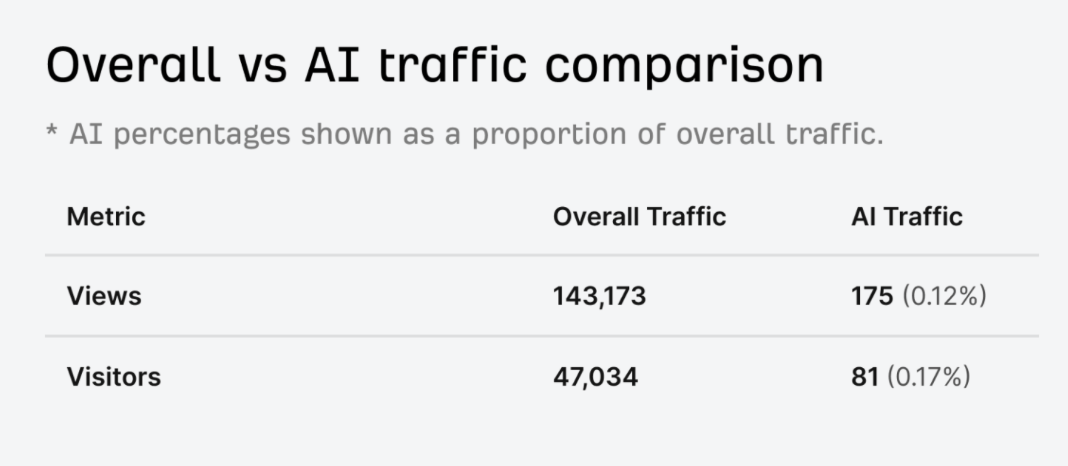
The study also notes that some AI-influenced visits may be recorded as direct traffic, meaning the visible referral figures can underestimate the actual influence of AI.
A practical AI prompt
"Review this website page from the perspective of someone looking for an answer to [topic]. Identify unclear explanations, missing context, unsupported claims, and sections that could be more useful. Suggest ways to make the page easier to understand, more specific, and better organized. Prioritize accuracy and reader value rather than adding unnecessary keywords."
Don't fall for shortcuts: No AI tool can guarantee that ChatGPT, Google AI Overviews, or another platform will mention your website. Focus on building a useful resource that deserves to be discovered and referenced.
6. Build more ways for people to discover your website
A common mistake is depending entirely on Google to bring visitors.
Organic search can be an important source of long-term traffic, but it isn't the only way people discover websites.
You can also attract visitors through newsletters, social platforms, industry websites, online communities, videos, and collaborations.
AI can help you identify which of these channels are worth exploring instead of spreading your efforts everywhere.
Find where your audience already spends time
Start by describing your ideal audience.
For example, if your website sells software for small businesses, your potential visitors might already be reading:
Entrepreneurship blogs.
Business newsletters.
Software comparison websites.
Startup communities.
Professional LinkedIn discussions.
Industry-specific publications.
If you run a fitness website, the relevant channels might be fitness communities, training videos, health publications, and specialist newsletters.
The point is to identify places where people are already interested in your subject.
Use AI to find collaboration ideas
You can ask AI to help you organise potential partnerships and suggest ways to contribute something useful.
For example:
Write a guest article for a relevant publication.
Contribute expert comments to an industry blog.
Take part in a podcast interview.
Create a resource with another business.
Share original research with relevant publishers.
Answer questions in communities where your expertise is useful.
AI can help prepare personalised outreach messages, but you should verify each website and contact before reaching out.
Create content that leads people back to your website
You can also use one useful resource as the starting point for a wider distribution strategy.
Imagine you publish a detailed guide about choosing an AI website builder.
If you're still exploring what AI can actually do when building a website, read our guide on whether AI can create a website from scratch
You could create:
A short video explaining three mistakes to avoid.
A LinkedIn post comparing different website-building approaches.
An email newsletter linking to the complete guide.
A visual checklist for social media.
A useful answer to a relevant community question.
Each format should provide value on its own rather than simply repeating "visit our website".
Content marketing research also shows why distributing useful content across different channels can matter. In the Content Marketing Institute's 2025 B2B research, 87% of surveyed B2B marketers said content marketing helped create brand awareness over the previous 12 months. Another 74% said it helped generate demand or leads.
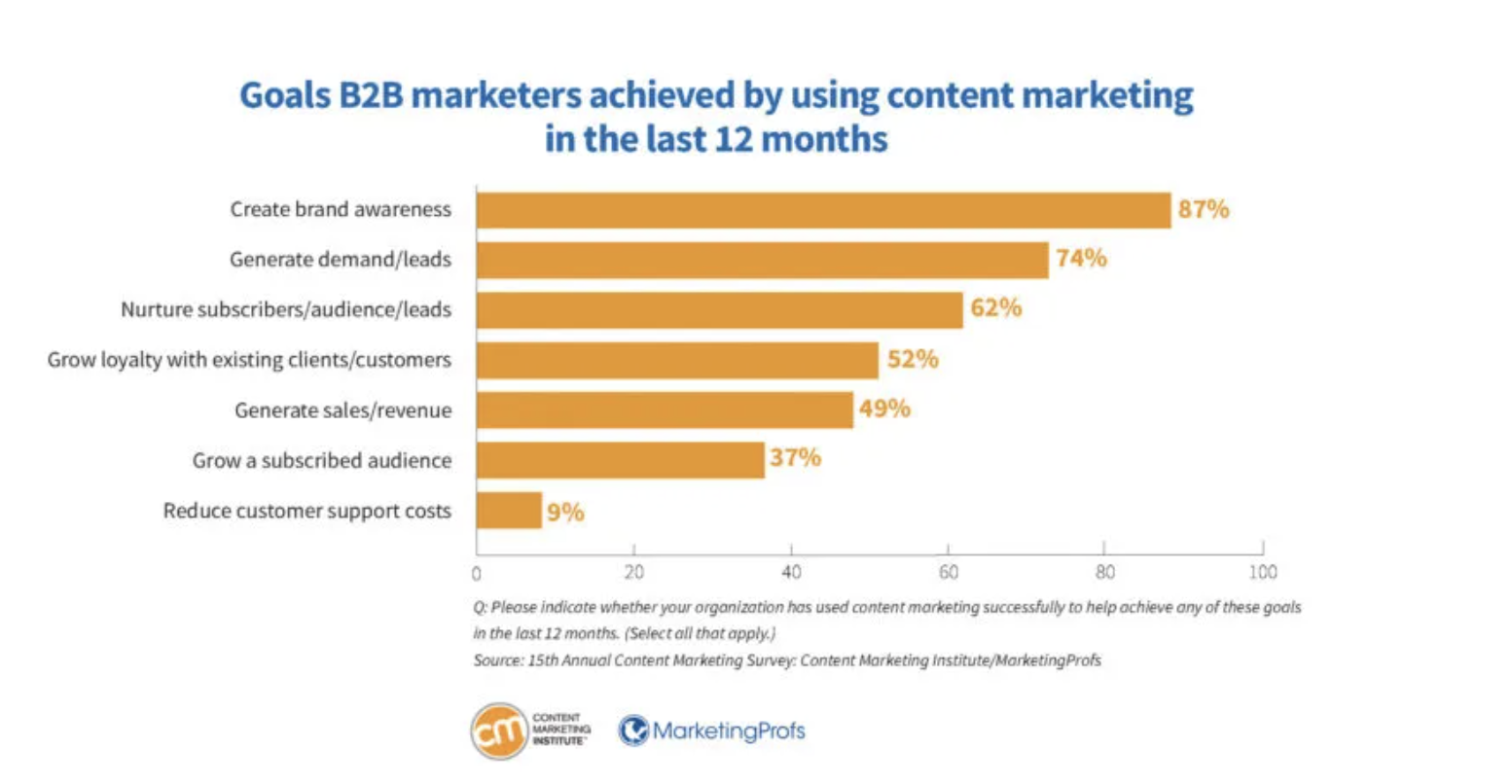
These figures describe marketers' reported results, not a guarantee that publishing content will increase website traffic. However, they illustrate how content can support visibility and audience development beyond search rankings alone.
Try this prompt:
"My website helps [target audience] with [topic]. Identify relevant categories of online publications, communities, newsletters, and platforms where this audience might discover useful information. Suggest realistic collaboration opportunities and content ideas for each channel. Explain why each channel is relevant. Do not invent partnerships or contact details."
The aim is to build several relevant discovery paths so your website isn't entirely dependent on one platform.
7. Use AI to monitor your website and spot new growth opportunities
Website growth isn't something you work on once and then forget.
Search demand changes. Competitors publish new pages. Older articles become outdated. Some traffic sources grow while others decline.
If you only review your website every few months, you might miss opportunities to react earlier.
AI can help you turn website monitoring into a more regular process.

Read more about why AI-driven websites are the future of online business.
What should you monitor?
You don't need to track dozens of complicated metrics.
Start with a few that help you understand your website's performance:
What to monitor | Where to find it | Why it matters |
Organic clicks and impressions | Google Search Console | Understand search visibility |
Search queries | Google Search Console | Find new keyword opportunities |
Traffic sources | Google Analytics 4 | See where visitors come from |
Landing-page performance | Google Analytics 4 | Identify pages attracting visitors |
Engagement and conversions | Google Analytics 4 | Understand what visitors do |
Technical issues | Google Search Console and website audit tools | Identify problems that may affect accessibility or visibility |
Turn your data into a monthly action plan
At the end of each month, export your reports and ask AI to compare them with the previous period.
For example, it might help you identify:
Articles that have lost organic clicks.
Pages receiving more impressions but not more visits.
New search queries worth investigating.
Traffic sources that are becoming more important.
Landing pages attracting visitors but generating few conversions.
Content that may need updating.
You can then decide which improvements deserve your attention.
A practical example
Imagine your website received 4,000 organic visits last month and 3,200 this month.
Instead of immediately publishing more articles, ask AI to help you investigate:
Which pages lost the most clicks?
Did impressions also decrease?
Did average positions change?
Were certain keywords affected more than others?
Did the decline happen across the entire website or only a few pages?
This helps you investigate the cause instead of making random changes.
A practical AI prompt
"Compare these website performance reports for the current and previous month. Identify the pages, search queries, and traffic sources with the largest changes. Highlight possible opportunities and issues that deserve investigation. Separate confirmed changes from possible explanations, and create a prioritised action plan based on the data. Do not recommend changes without explaining the evidence behind them."
You can repeat this process every month and gradually build a clearer picture of what attracts visitors to your website.
How to use AI to increase website traffic without damaging your SEO
AI can make it much easier to create and optimise website content. But using it without a clear strategy can lead to problems.
Here are a few mistakes to avoid.

Publishing hundreds of AI-generated pages
Creating more pages doesn't automatically mean attracting more visitors.
Google's spam policies specifically identify scaled content abuse as a problem. This includes generating large numbers of pages with AI when the primary purpose is manipulating search rankings rather than helping users.
Use AI to improve your research and content process, not to fill your website with generic articles.
Targeting keywords that aren't relevant to your business
A keyword might have attractive search demand but still be completely irrelevant to your audience.
For example, a company selling accounting software doesn't need to publish articles about every trending finance topic.
Focus on subjects that connect naturally to your expertise and what your website offers.
Trusting AI-generated data without checking it
AI can misunderstand reports, produce inaccurate figures, or invent statistics.
Always verify important information using the original source.
Ignoring technical website problems
Even useful content needs to be accessible to search engines and visitors.
Pay attention to broken links, indexing problems, mobile usability, page loading performance, and confusing website navigation.
Expecting instant results
Some changes, such as improving a title or promoting an article to an existing audience, may produce relatively quick feedback.
SEO growth usually requires more patience. Results depend on competition, website authority, content quality, search demand, and many other factors.
Measure your progress and avoid making major decisions based on a few days of data.
Final thoughts: Use AI to find better opportunities for website growth
The best ways to increase website traffic by AI aren't about generating as much content as possible or automating every marketing activity.
They're about understanding what is happening on your website and using that information to make better decisions.
AI can help you discover why certain pages aren't attracting visitors, identify keyword opportunities, understand search intent, improve existing content, and find new ways for people to discover your business.
It can also make it easier to monitor your results and decide what to improve next.
But remember that AI is a tool, not a replacement for a good strategy.
Start by looking at your website data. Find one problem or opportunity, make a meaningful improvement, and measure the result. Then repeat the process with the next priority.
Over time, you'll build a more consistent traffic strategy based on real audience needs rather than guesswork.
The goal isn't simply to get more visitors. It's to attract the people who are genuinely interested in what your website has to offer.
Want to put these ideas into practice? With Neopress, you can build and grow your website just by chatting. Create pages, publish content, and understand your website traffic with AI, so you can spend more time focusing on your business and attracting the right visitors.
FAQ:
1. What are the best ways to increase website traffic by AI?
Some effective approaches include using AI to identify SEO opportunities, analyse competitor keywords, improve existing pages, create content that matches search intent, increase visibility in AI-powered search, and monitor website performance. The best strategy depends on your audience, industry, and current traffic sources.
2. Can AI help increase organic website traffic?
Yes. AI can support keyword research, content planning, search intent analysis, page optimisation, and website performance reviews. However, it cannot guarantee higher rankings. Organic traffic still depends on content quality, competition, relevance, technical accessibility, and search engine systems.
3. Which AI tools are useful for increasing website traffic?
ChatGPT can help with research, analysis, and content planning. Semrush and Ahrefs provide SEO and competitor research features. Google Search Console helps you monitor search performance, while Google Analytics 4 helps you understand traffic sources and visitor behavior. You can also use Canva and CapCut to create content for other discovery channels.
4. Can AI help my website appear in ChatGPT search results?
AI can help you create clear, useful, accurate, and well-structured content that answers relevant questions. Strong SEO fundamentals also remain important. However, no tool can guarantee that your website will be cited or recommended by ChatGPT or another AI platform.
5. How can I use AI to find keywords for my website?
Give an AI assistant information about your business, audience, and competitors. Ask it to identify relevant topics, group search queries by intent, and suggest keyword opportunities. Then validate the suggestions with SEO tools such as Semrush, Ahrefs, or Google Keyword Planner. Don't treat AI-generated search-volume figures as verified data.
6. Can AI improve my website's Google rankings?
AI can help you identify content gaps, improve page structure, understand search intent, and find technical or content issues worth investigating. These improvements may support your SEO strategy, but they don't guarantee better rankings. Focus on providing useful information and a good experience for visitors.
7. How do I know whether AI is actually increasing my website traffic?
Compare your website performance before and after implementing specific changes. Use Google Search Console to track organic clicks and impressions, and Google Analytics 4 to monitor traffic sources, landing pages, engagement, and conversions. Make sure you compare consistent time periods and consider other factors that could explain the changes.
8. Is AI-generated content safe for SEO?
AI-generated content is not automatically harmful to SEO. What matters is its quality, accuracy, originality, and usefulness. However, publishing large amounts of unoriginal pages primarily to manipulate search rankings can violate Google's spam policies. Review AI-generated content and add genuine value before publishing.
9. Can I increase website traffic with AI for free?
Yes. You can start with free tools such as Google Search Console, Google Analytics 4, and free versions or tiers of AI assistants. These can help you analyse data, research topics, improve content, and plan your strategy. More advanced SEO research and automation features may require paid subscriptions.
10. How long does it take to increase website traffic using AI?
There is no guaranteed timeline. Promoting a page to an existing audience may generate visits relatively quickly, while SEO improvements often take longer to show results. The time required depends on your website, competition, content, technical setup, and the changes you implement.
Newsletter
A sharper growth note, once in a while.
Get practical SEO strategies, SSR guides, and AI search insights delivered directly to your inbox.
We respect your privacy. Unsubscribe at any time.