Neopress growth journal
What are AI agents and why do they matter for your business?

Artificial intelligence is changing the way businesses work. From answering customer questions to analyzing data, AI tools are already helping companies save time and improve productivity.
But a new development is taking things further: AI agents.
Unlike traditional AI tools that mainly respond to instructions, AI agents can plan tasks, use external tools, make decisions, and carry out multiple steps to achieve a specific goal.
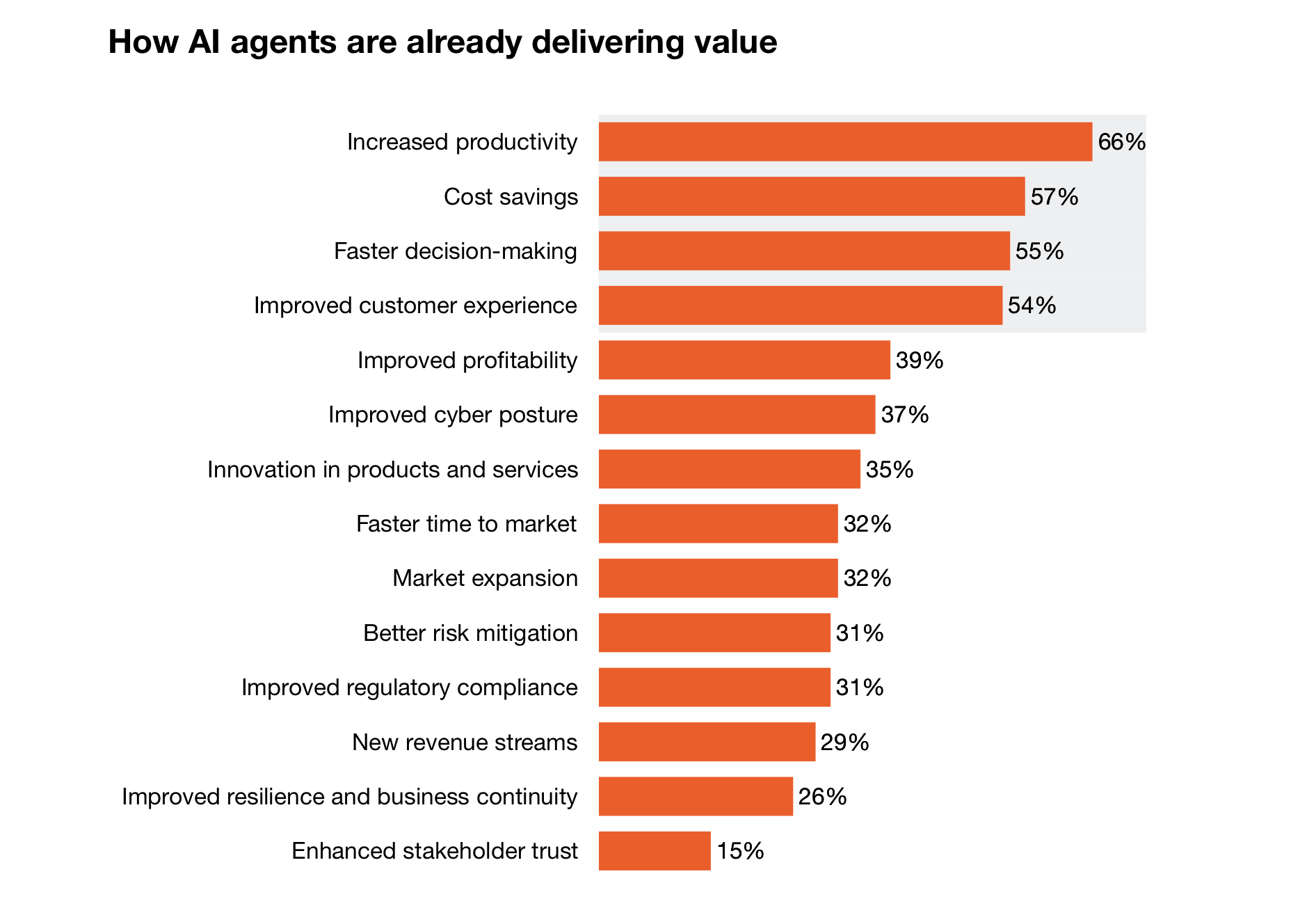
And businesses are already seeing the potential. According to PwC's 2025 AI Agent Survey, 79% of surveyed executives said AI agents were already being adopted in their companies. Among businesses adopting them, 66% reported increased productivity.
So, what are AI agents exactly? How do they work, and how can they help your business?
Let's break it down.
What are AI agents?
AI agents are artificial intelligence systems that can independently perform tasks by planning workflows, using available tools, and taking actions to achieve specific goals.
Think of them as digital assistants that can do more than simply answer your questions. You give them an objective, and they determine the steps needed to complete it.
For example, imagine you run an online store and want to improve your customer support. You could use an AI agent to:
Read incoming customer messages.
Identify what each customer needs.
Check order information in your store.
Find relevant shipping or return information.
Prepare a response or take an approved action.
Instead of handling each step manually, the agent can coordinate several actions to complete the task.
In short, an AI agent doesn't just tell you what to do. It can help you actually get things done.
How do AI agents work?
AI agents combine language models, planning, external tools, and feedback mechanisms to complete tasks. Although their architecture can vary, their operation generally involves three main stages.
1. Goal setting and planning
First, the agent receives a goal from the user.
It then breaks that objective into smaller tasks and determines which steps are necessary to achieve the desired result.
For example, if you ask an AI agent to prepare a market research report, it might create a plan that includes:
Identifying relevant competitors.
Finding information about their products and services.
Comparing their pricing.
Analyzing customer feedback.
Organizing the results into a report.
For simple requests, an agent may not need a detailed plan. More complex tasks usually require several steps.
2. Reasoning and using external tools
An AI agent doesn't always have all the information it needs. Instead of relying only on its existing knowledge, it can use external tools to fill in the gaps.
Depending on its permissions and configuration, these tools might include:
Web searches and external databases.
APIs and business applications.
Company documents and internal databases.
Other specialized AI agents.
Let's say you ask an agent to identify the best time of year to organize a surfing trip in Greece.
The agent could retrieve historical weather information, consult another specialized system for surfing conditions, and combine the results to identify suitable periods.
This ability to gather information and adjust its approach makes AI agents useful for tasks that involve several different sources.
3. Learning and reflection
AI agents can also use feedback to improve their results.
After completing a task, an agent may evaluate its performance, receive feedback from a human or another system, and store relevant information for future interactions.
For example, if a customer support agent repeatedly receives feedback that its answers are incomplete, its instructions or knowledge base can be updated to improve future responses.
Some systems also use memory to retain relevant information about previous interactions and user preferences.
However, not every AI agent automatically learns from every interaction. Its ability to remember or improve depends on how the system is designed.
AI agents vs traditional AI chatbots: What's the difference?
You might be wondering: aren't AI agents just chatbots with a different name?
Not exactly.
Traditional chatbots are mainly designed to understand questions and provide answers. They usually require users to guide the conversation and provide additional instructions when a task involves several steps.
AI agents can go further by planning workflows, accessing external tools, and performing actions toward a specific objective.
Feature | Traditional AI chatbot | AI agent |
Main purpose | Answer questions and generate responses | Complete tasks and achieve goals |
Planning | Usually limited | Can break complex tasks into smaller steps |
Tool usage | May be limited or unavailable | Can use external tools and applications |
Memory | Often limited to the conversation | Can use persistent memory, depending on its design |
Actions | Mainly generates responses | Can perform actions within its permissions |
Human input | Often needs repeated instructions | Can work through multiple steps with less guidance |
For example, a traditional chatbot might explain how to organize your customer database.
An AI agent could potentially access an authorized CRM, organize customer information, identify incomplete records, and prepare updates for your approval.
The key difference is that a chatbot primarily responds to requests, while an AI agent can take a more active role in completing the work.
What are the different types of AI agents?
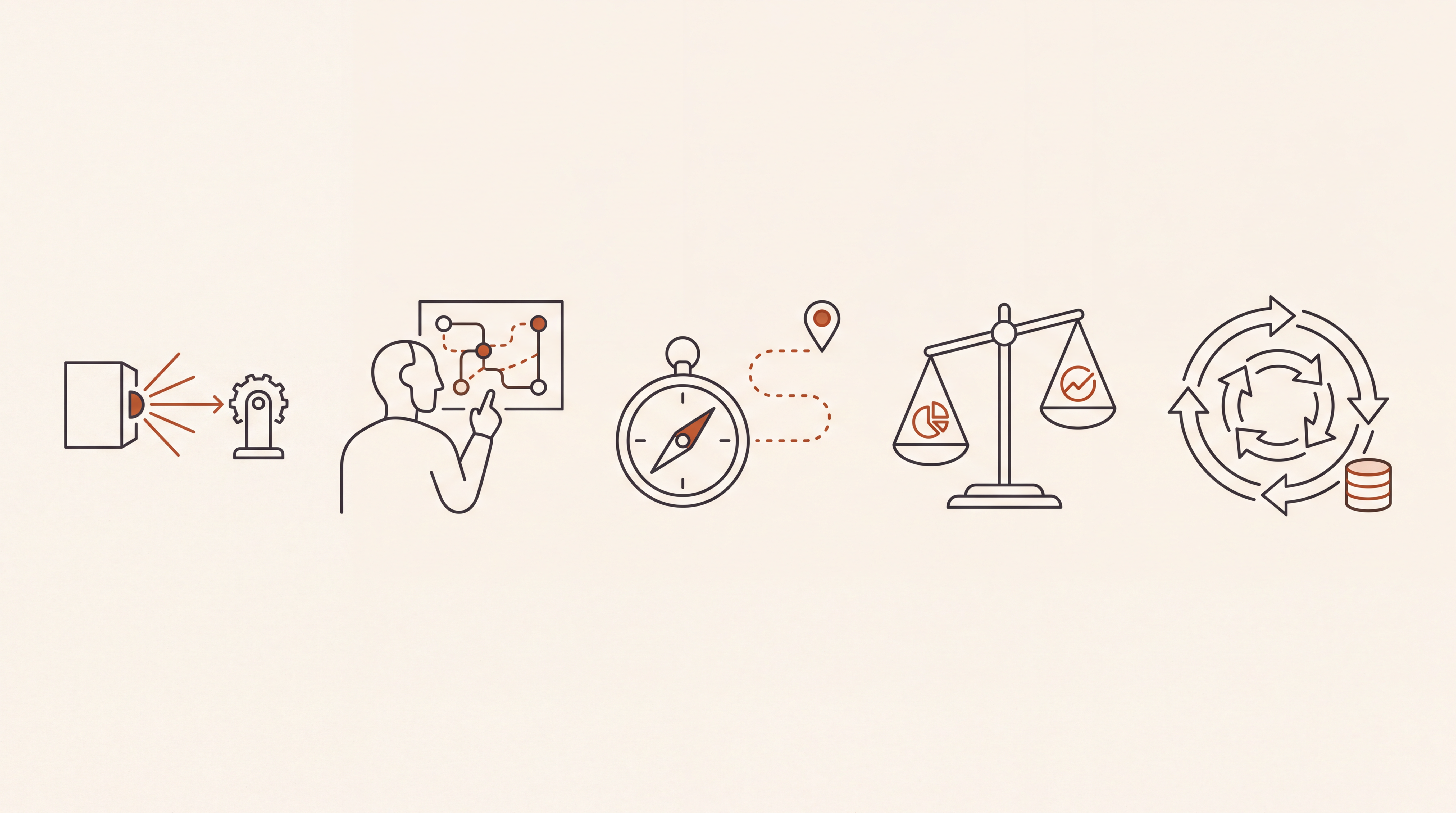
AI agents can be designed with different levels of complexity. Some follow simple rules, while others can plan, evaluate different options, and learn from experience.
There are five traditional types of AI agents:
1. Simple reflex agents
Simple reflex agents respond to specific conditions using predefined rules.
They don't rely on memory or past experiences. Instead, they react to what they currently observe.
Example: A thermostat that automatically turns on the heating when the temperature drops below a certain level.
2. Model-based reflex agents
These agents use both current information and an internal model of their environment. Unlike simple reflex agents, they can remember certain information and adjust their actions based on previous observations.
Example: A robot vacuum cleaner that remembers which areas it has already cleaned and avoids repeatedly cleaning the same places.
3. Goal-based agents
Goal-based agents work toward a specific objective. They evaluate possible actions and choose a sequence of steps that can help them reach their goal.
Example: A navigation system that compares different routes and recommends one that gets you to your destination.
4. Utility-based agents
Utility-based agents go a step further. They don't simply look for a way to achieve a goal; they try to find the most beneficial option based on predefined criteria.
Example: A navigation system that considers travel time, fuel consumption, and toll costs to recommend the most efficient route.
5. Learning agents
Learning agents improve their performance by using information from previous experiences and feedback.
They can adapt to unfamiliar situations and refine their decisions over time, depending on how they are designed.
Example: An ecommerce recommendation system that analyzes customer activity and preferences to suggest products that are more relevant to each visitor.
Why do AI agents matter for your business?
AI agents are becoming increasingly relevant because they can help businesses automate more than individual repetitive actions. They can coordinate multiple steps within a workflow, reducing the amount of manual work required.
Here are some of the main ways businesses can benefit from them.
1. Automate repetitive tasks
Many businesses spend hours handling tasks that follow similar processes every day.
AI agents can help automate activities such as collecting information, processing requests, organizing data, and managing certain administrative workflows.
For example, an agent could receive a customer request, retrieve relevant information from an internal database, prepare a response, and forward the case to the appropriate department if necessary.
This allows employees to spend less time on repetitive work and more time on tasks that require human judgment.
Research also suggests that AI assistance can improve workplace productivity. A 2025 study published in the Quarterly Journal of Economics examined 5,172 customer support agents and found that access to a generative AI assistant increased the number of customer issues resolved per hour by 15% on average.
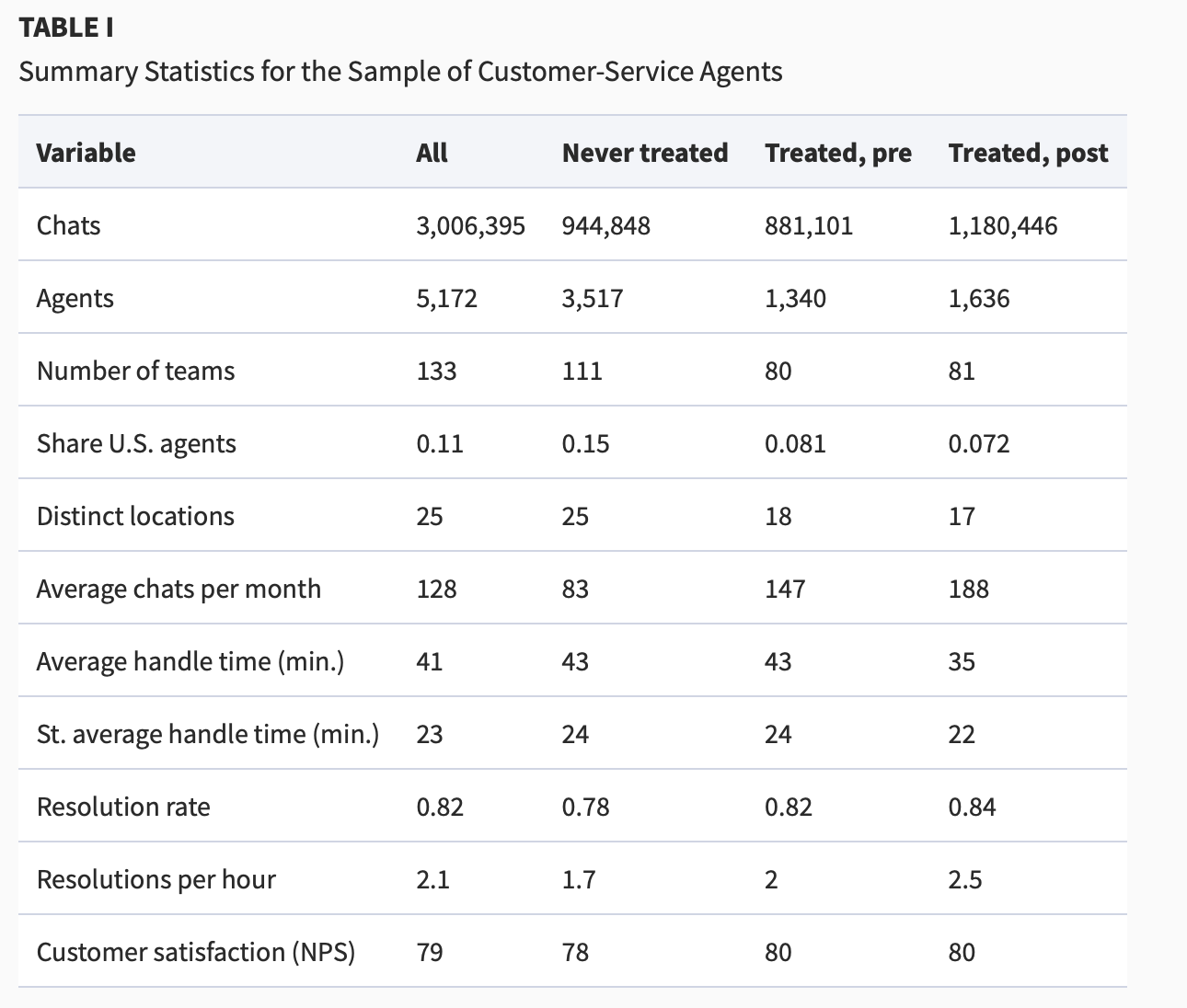
Notes: This table shows summary statistics of conversations, agent characteristics, and issue resolution rates, customer satisfaction and average call duration. The first column consists of all agents in our sample, the second column includes control agents who never receive AI access. The third column presents statistics for treated agents before they receive AI access, and the fourth column includes treated agents after AI model deployment.
It's important to understand what this number means: the study examined an AI assistant that supported human employees, not fully autonomous AI agents. Still, it provides useful evidence of how AI can help people handle everyday business tasks more efficiently.
2. Improve customer experience
AI agents can be integrated into websites and applications to provide customer support and assistance.
They can help answer questions, retrieve order information, guide customers through processes, and handle certain requests without requiring a human employee at every step.
For an online store, an AI agent could help customers find products, explain delivery information, or check the status of an order through connected systems.
The result can be a faster and more convenient customer experience, particularly when businesses receive a high volume of similar requests.
PwC's survey also found that 54% of companies adopting AI agents reported improvements in customer experience. This shows that the benefits are not limited to internal productivity; businesses are also seeing value in customer-facing activities.
3. Make better use of business data
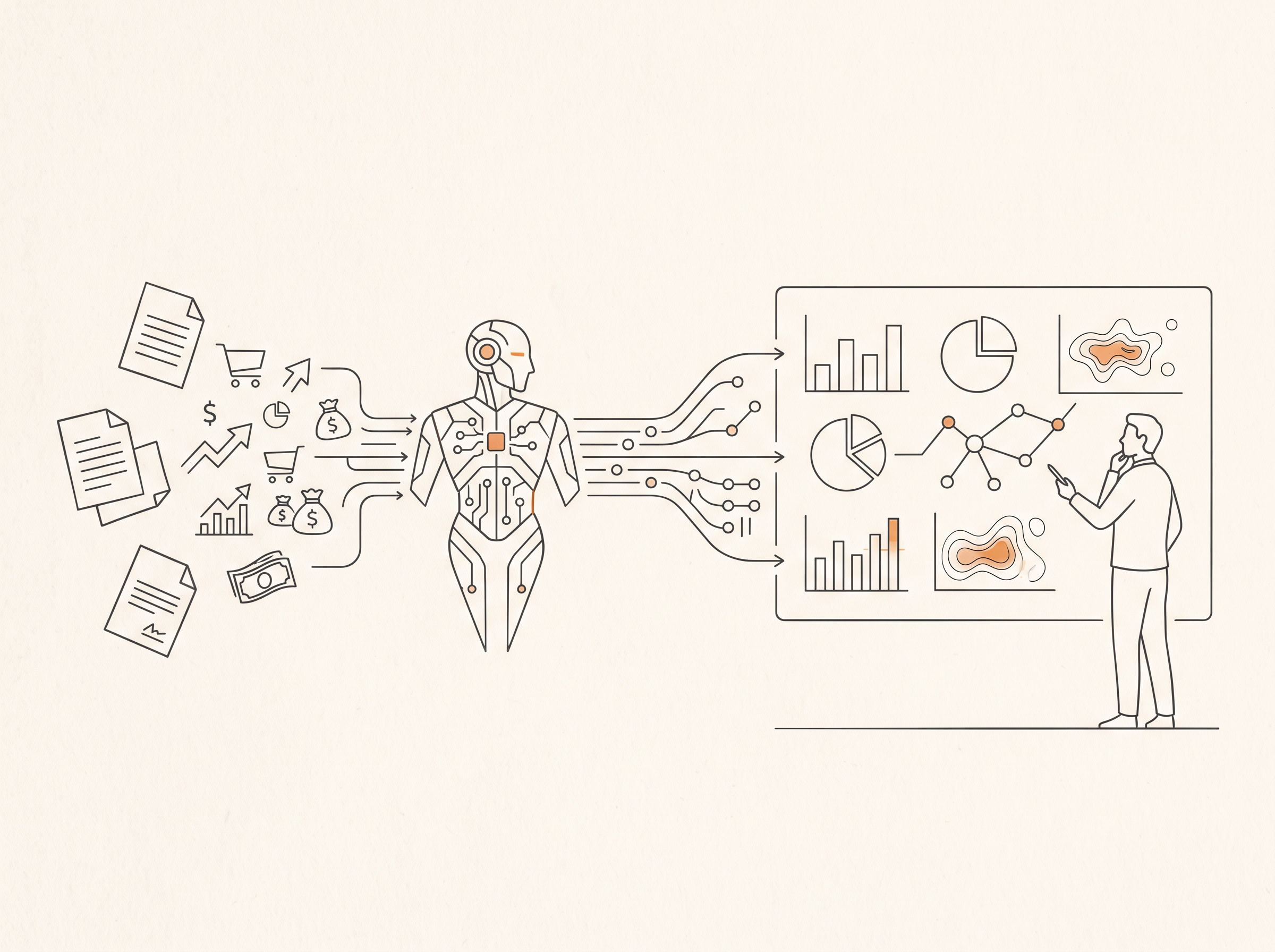
Businesses collect large amounts of information, but analyzing it manually can take time.
AI agents can retrieve information from different sources, identify patterns, and organize findings to support decision-making.
For example, a sales team could use an AI agent to analyze sales performance, compare results across different periods, and prepare a summary of important trends.
However, important business decisions should still be reviewed by people, especially when they involve financial or strategic risks.
4. Optimize finance and supply chain operations
AI agents can also support financial analysis and supply chain management.
Depending on the systems they can access, they may help analyze financial data, monitor inventory information, identify potential supply issues, and support demand forecasting.
For example, an agent could monitor stock levels and notify a business when certain products are running low.
This can help companies identify potential problems earlier and make their operations more efficient.
5. Support employees across different departments
AI agents aren't limited to customer service or data analysis.
They can also support software development, IT automation, research, marketing, and other business functions.
Here are a few examples:
Marketing: Research audiences, analyze campaign performance, and help prepare content.
Sales: Research potential customers, update CRM records, and prepare follow-up messages.
Human Resources: Help organize applications, answer employee questions, and manage onboarding tasks.
Finance: Process routine financial information, organize invoices, and flag unusual transactions.
IT: Help investigate technical issues, monitor systems, and support troubleshooting.
Customer Service: Retrieve customer information, answer common questions, and manage support requests.
Marketing is another area where AI is changing everyday business workflows. If you're interested in how companies are already using these tools, read our beginner's guide to using AI in marketing.
The real opportunity comes from connecting these tasks. Instead of using separate tools for every department, businesses can build workflows in which multiple agents work together.
Real-world example: AI agents in legal research
AI agents are already being used to solve practical business problems.
One example comes from Dynamiq, which built a multi-agent legal research assistant for a major insurance client using IBM watsonx Orchestrate.
The system first routes incoming legal questions through a lower-cost IBM Granite classifier. More complex requests are then escalated to a specialized research agent.
According to the example, this approach reduced contract review time from 90 minutes to 45 minutes, while keeping decisions auditable and cost-effective.
It illustrates how businesses can combine different AI agents to handle tasks more efficiently instead of relying on a single system for everything.
Source: IBM – How Dynamiq built a cost-aware, legal research workflow with IBM watsonx
What are the main benefits of AI agents?
Beyond automating individual tasks, AI agents can bring several advantages to businesses.
Benefit | How it helps your business |
Time savings | Automates multi-step workflows and reduces repetitive manual work |
Greater productivity | Allows employees to focus on higher-value activities |
Scalability | Helps businesses handle larger volumes of requests and tasks |
Better information processing | Collects and combines information from different sources |
Personalization | Can adapt responses using relevant user preferences and stored information |
Workflow optimization | Connects different tools and systems to complete tasks more efficiently |
Another advantage is collaboration between multiple specialized agents. One agent might collect information, another could analyze it, and a third could prepare the final report.
This approach can be useful when a task requires several types of expertise.
What should businesses consider before using AI agents?
Although AI agents offer interesting opportunities, they aren't perfect. Giving an AI system the ability to make decisions and perform actions also creates new challenges.
Before implementing them in your business, it's important to understand the potential risks.
1. Data privacy and security
AI agents may need access to sensitive business information, customer records, or internal applications to complete their tasks.
If access isn't properly controlled, this can create security and privacy risks.
Businesses should define permissions carefully, protect sensitive information, and ensure that agents can only access the data necessary for their tasks.
2. Incorrect decisions
AI agents can misunderstand instructions, retrieve unreliable information, or make incorrect decisions.
This is particularly important when agents work with financial information, customer data, or other sensitive business processes.
Human review should remain part of workflows where mistakes could have significant consequences.
3. Unintended loops and errors
Sometimes an agent can get stuck repeating the same actions without making meaningful progress.
For example, it might repeatedly search for information or call the same external tool because it cannot resolve a problem.
Businesses should establish execution limits, monitoring systems, and interruption mechanisms to prevent these situations.
4. Implementation costs and complexity
Building and deploying advanced AI agents can require technical expertise, infrastructure, and ongoing maintenance.
Complex multi-agent systems can also consume significant computing resources.
For smaller businesses, it may be more practical to start with a simple, well-defined automation rather than building an advanced agent from scratch.
Best practices for using AI agents in your business
To get the most out of AI agents, businesses need to implement them carefully.
Here are four important practices to consider:
Monitor agent activity: Keep logs of the actions performed, the tools accessed, and the results produced. This makes it easier to identify mistakes and understand how the system operates.
Set clear permissions: Only give agents access to the information and applications they actually need.
Allow human intervention: Employees should be able to interrupt an agent and review important actions before they are completed.
Require approval for high-impact actions: Sending large volumes of emails, making financial decisions, or modifying sensitive records should require appropriate human confirmation.
The goal isn't to remove people from every process. It's to use AI agents where they can genuinely improve efficiency while keeping important decisions under human control.
AI is also changing how businesses build and manage their online presence. AI-powered websites can help companies create pages, publish content, and understand website performance more efficiently. To explore this development, read our article on why AI-driven websites are the future of online business.
Final thoughts: Are AI agents worth it for your business?
AI agents represent an important step forward in business automation. Unlike traditional chatbots that mainly answer questions, they can plan tasks, use external tools, and complete multi-step workflows with less human intervention.
For businesses, this creates opportunities to improve customer support, automate repetitive work, analyze information, and coordinate operations.
However, adopting AI agents doesn't mean giving them unlimited control. Their performance depends on the quality of their instructions, available tools, security settings, and human supervision.
The best approach is to start with a specific business problem, test an agent on a limited workflow, and measure whether it actually saves time or improves results.
FAQ
1. What are AI agents in simple terms?
AI agents are software systems that use artificial intelligence to complete tasks toward a specific goal. They can plan steps, access external tools, and perform actions rather than simply responding to questions.
2. How are AI agents different from ChatGPT?
ChatGPT is primarily a conversational AI assistant, while an AI agent is designed to pursue goals and perform tasks using available tools. Some versions of ChatGPT and other AI assistants can also use agent-like capabilities, so the distinction depends on the features and configuration being used.
3. Can AI agents work without human supervision?
AI agents can perform certain tasks autonomously, but they still need human-defined goals, permissions, and safeguards. Human supervision is particularly important when actions could have significant consequences.
4. What are examples of AI agents in business?
Examples include customer support agents, ecommerce recommendation systems, financial analysis agents, inventory monitoring systems, and agents that assist with legal research or software development.
5. Can small businesses use AI agents?
Yes. Small businesses can use AI agents to automate customer inquiries, organize information, support marketing tasks, and manage repetitive workflows. The most suitable solution depends on the business's needs and budget.
6. Are AI agents expensive to implement?
Costs vary depending on the complexity of the agent, the tools it uses, the amount of data it processes, and the platform selected. Simple solutions can be relatively accessible, while custom multi-agent systems may require significant technical resources.
7. Will AI agents replace human employees?
AI agents can automate certain tasks, but they don't replace the need for human judgment, creativity, communication, and responsibility. In many businesses, their main value is helping employees work more efficiently rather than replacing them.
Newsletter
A sharper growth note, once in a while.
Get practical SEO strategies, SSR guides, and AI search insights delivered directly to your inbox.
We respect your privacy. Unsubscribe at any time.